What is an AI agent? How it works, key components, and examples
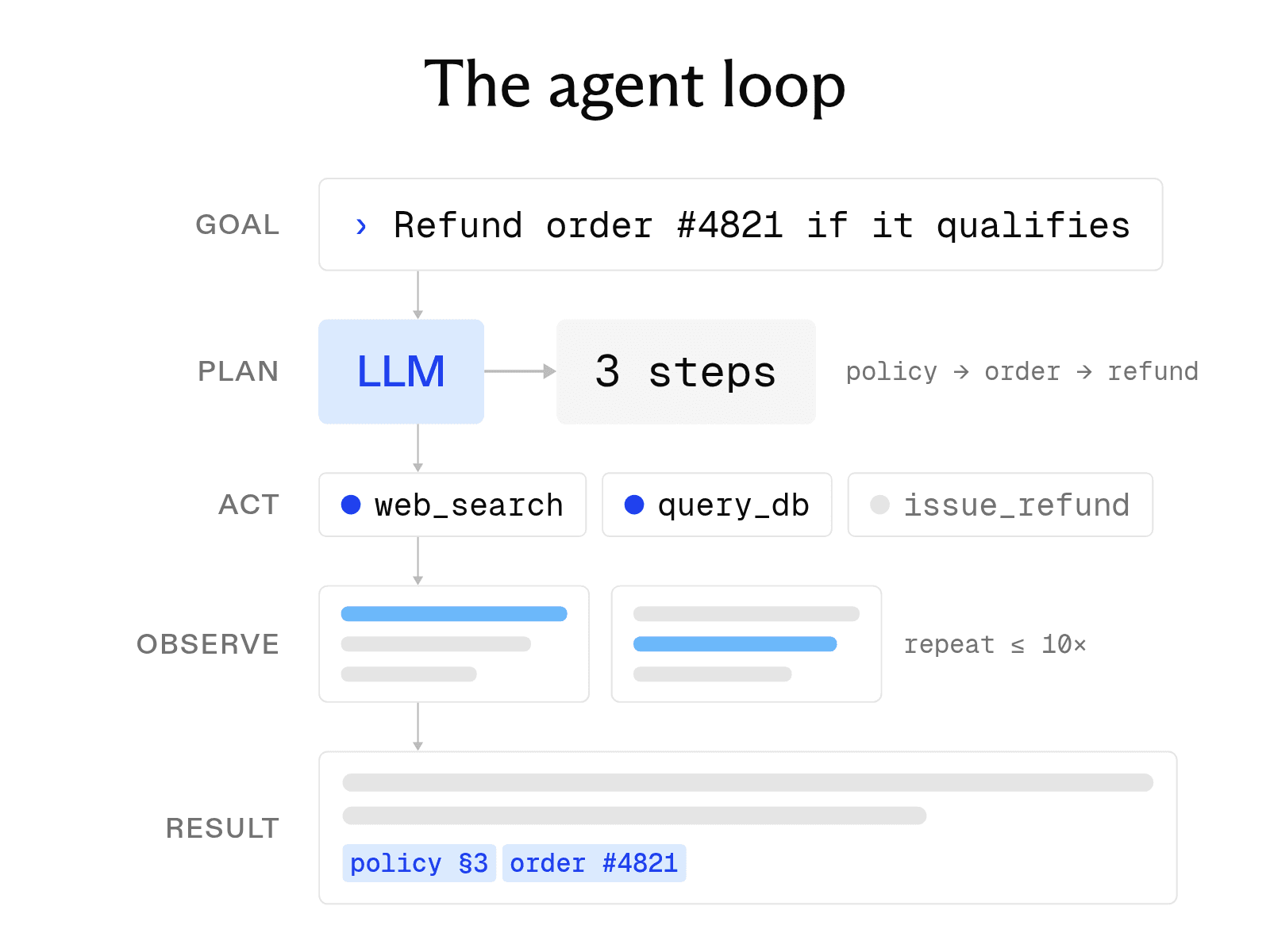

An AI agent is an autonomous program, often powered by a large language model, that perceives its environment, plans multi-step work, uses tools or APIs, and acts to reach a goal. AI agents automate work that a single prompt or rigid sequence of steps cannot handle.
In practice: a person gives the agent a goal, and the agent decides the steps, carries them out, and checks the results until the goal is met or it needs help.
At Exa, we build search and research infrastructure that gives AI agents access to information beyond their training data. This guide explains the core components of an agent, how they work together, where agents are used in production, and how capabilities such as web search fit into the agent loop.
Key components of AI agents
Four core capabilities distinguish an agent from a model that merely answers a prompt.
-
Autonomy. A developer defines the goal, tools, and guardrails. The agent chooses its next step and the order of work. Most production agents pause at certain points for human approval.
-
Reasoning and planning. The agent divides a goal into smaller tasks and orders them. If a step fails, the agent revises the plan and tries another approach.
-
Tool use. Tools let the agent read and modify external resources, such as a search index, database, or code runtime. The model requests a tool call in a structured format, and the surrounding software runs it.
-
Memory and iteration. Short-term memory tracks the current task, including the conversation, tool results, and progress. Long-term memory preserves information across sessions, such as user preferences. Together, they provide the context the agent needs to evaluate results and choose its next action.
How an AI agent works
The four capabilities describe what an agent needs. The operating loop shows how the agent uses them. Each pass has five steps.
-
Perceive. The agent receives the goal and new input, such as a user message, file, or result from its last action.
-
Plan. The model assesses the available information and chooses the next step.
-
Act. The agent uses a tool to search the web, query a database, or run code.
-
Observe. The agent reads the tool's output and adds it to the working context.
-
Repeat. The agent checks whether it has met the goal. If so, it returns a result. If not, it begins the loop with the new information.
To control costs and prevent repetition, most agents limit the number of loops and stop when they cannot progress.
AI agents vs. chatbots and workflows
Chatbots, workflows, and agents can all use language models. They differ in who decides what happens next.
| Chatbot | Workflow | Agent | |
|---|---|---|---|
| Who decides the steps | The user, one message at a time | A developer, in advance | The model, at runtime |
| Uses tools | Sometimes, one call per reply | Yes, in a fixed order | Yes, in any order it chooses |
| Handles surprises | Asks the user | Follows the fixed path or fails | Changes its plan |
| Best fit | Questions and drafting | Repeatable, predictable tasks | Open-ended tasks with many steps |
A chatbot responds to one message at a time. A workflow follows the same path on every run, making it inexpensive and easy to debug. An agent adapts its plan to what it finds, but this flexibility requires more tokens and testing. Many production systems therefore place a small agent inside a larger fixed workflow. An agent's ability to adapt depends largely on its tools.
How AI agents use tools
A model alone can produce only text. Tools let an agent gather information and act in other systems. Most agents rely on four types of tools.
-
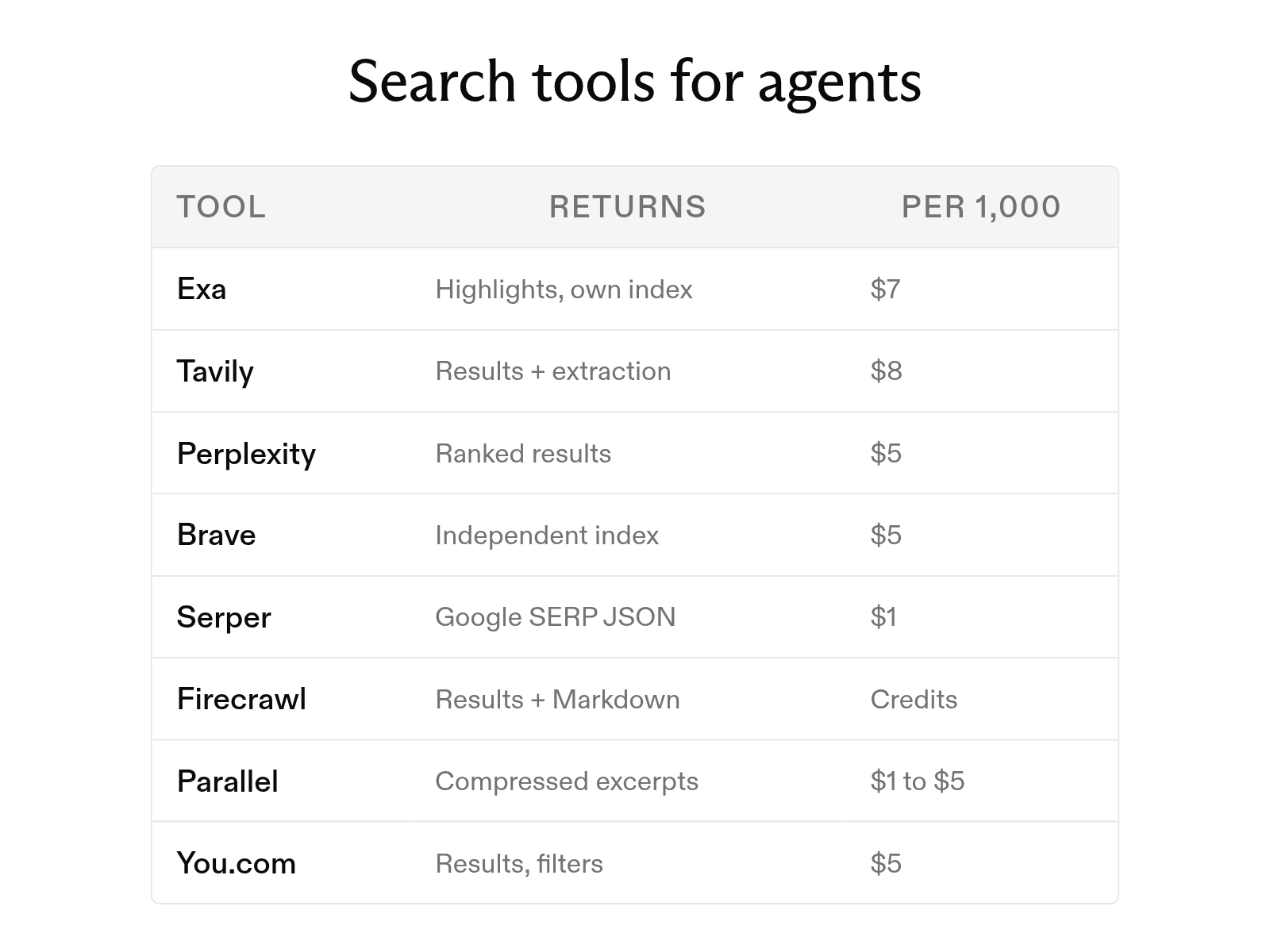
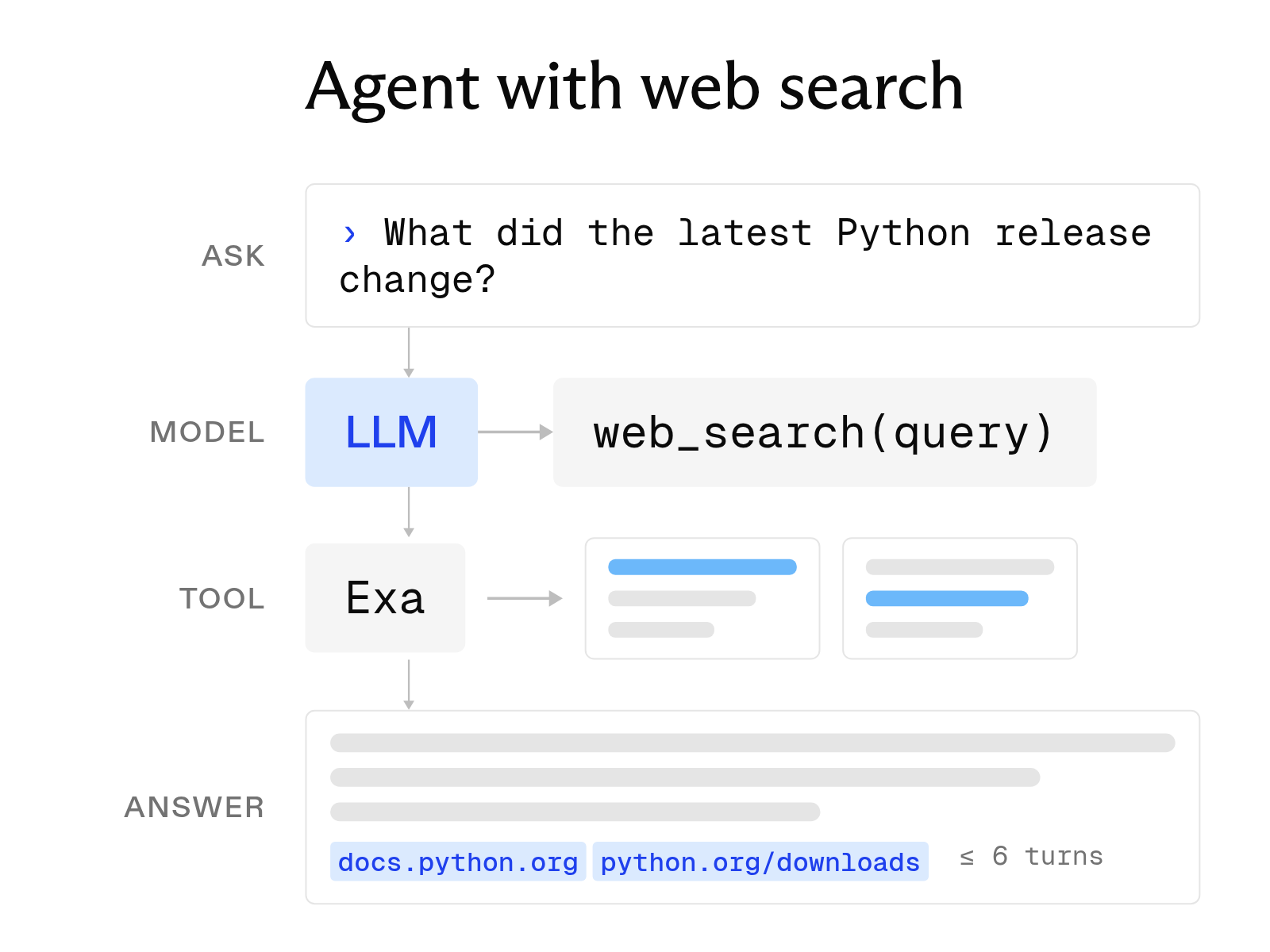
Web search gives an agent current information beyond its training cutoff. Without search, the agent may rely on outdated data when answering questions about recent events. Developers can connect a search API such as Exa Search, which returns relevant passages from web pages. Agents whose whole loop revolves around searching, reading, and searching again are search agents.
-
Code execution lets the agent write and run code in a sandbox to perform calculations and analyze data.
-
File access lets the agent read, create, and edit documents or code in an authorized workspace.
-
APIs connect the agent to business systems such as a CRM, ticketing tool, or payment service. The agent can then update a record or issue a refund.
AI agent frameworks and platforms
To build production agents, teams combine these tools at three levels of abstraction, balancing control and convenience.
-
Code frameworks give developers the most control. LangGraph is a low-level framework and runtime for coordinating long-running, stateful agents. Developers can combine fixed, hand-coded steps with model-driven steps in one graph. LangGraph also supports human review and memory across sessions.
-
Low-code builders place an agent inside a visual workflow. For example, n8n offers more than 500 integrations, human review steps, and a self-hosted option. It supports multi-agent systems, deep research agents, and retrieval-augmented generation agents.
-
Agent marketplaces offer the highest level of abstraction through prebuilt agents and tools. For example, AWS Marketplace lists thousands of offerings from AWS Partners, including Salesforce Agentforce among its featured listings.
AI agent examples in production
These components appear in production agents across customer service, data analysis, and software development.
-
Intercom's Fin is a customer service agent that can update accounts and process refunds through connected systems. Intercom reports a 76% average resolution rate across more than 12,000 customers. Fin uses Intercom's Apex models.
-
Uber's Finch is a data agent that works in Slack. Finance staff ask questions in plain English, and a supervisor agent routes each request to an SQL-writing agent. Before running a query, the SQL agent checks the user's permissions.
-
Claude Code is Anthropic's coding agent. It gathers context, takes action, and verifies results. It uses tools to read files, edit code, and run tests.
FAQ
Is ChatGPT an AI agent?
A standard chat conversation uses a chatbot that answers one message at a time. A product acts as an agent when it plans several steps and independently uses tools to complete a task. The same model can power either system.
What is the difference between an AI agent and agentic AI?
An AI agent is a specific system that pursues a goal. Agentic AI is a broader term for systems that act with some autonomy, including individual agents and multi-agent systems.
Do AI agents need a large language model?
No. Rule-based and reinforcement learning agents existed long before language models. Still, most modern agents use a large language model for reasoning and planning because it can interpret instructions and tool output in natural language.
Are AI agents safe to use in production?
Yes, when proper controls are in place. Give each agent only the permissions it needs, limit the number of steps, log every tool call, and require human approval for actions that are difficult to reverse, such as payments or deletions.
Cheers,
Keep learning
Browse all Learn articles →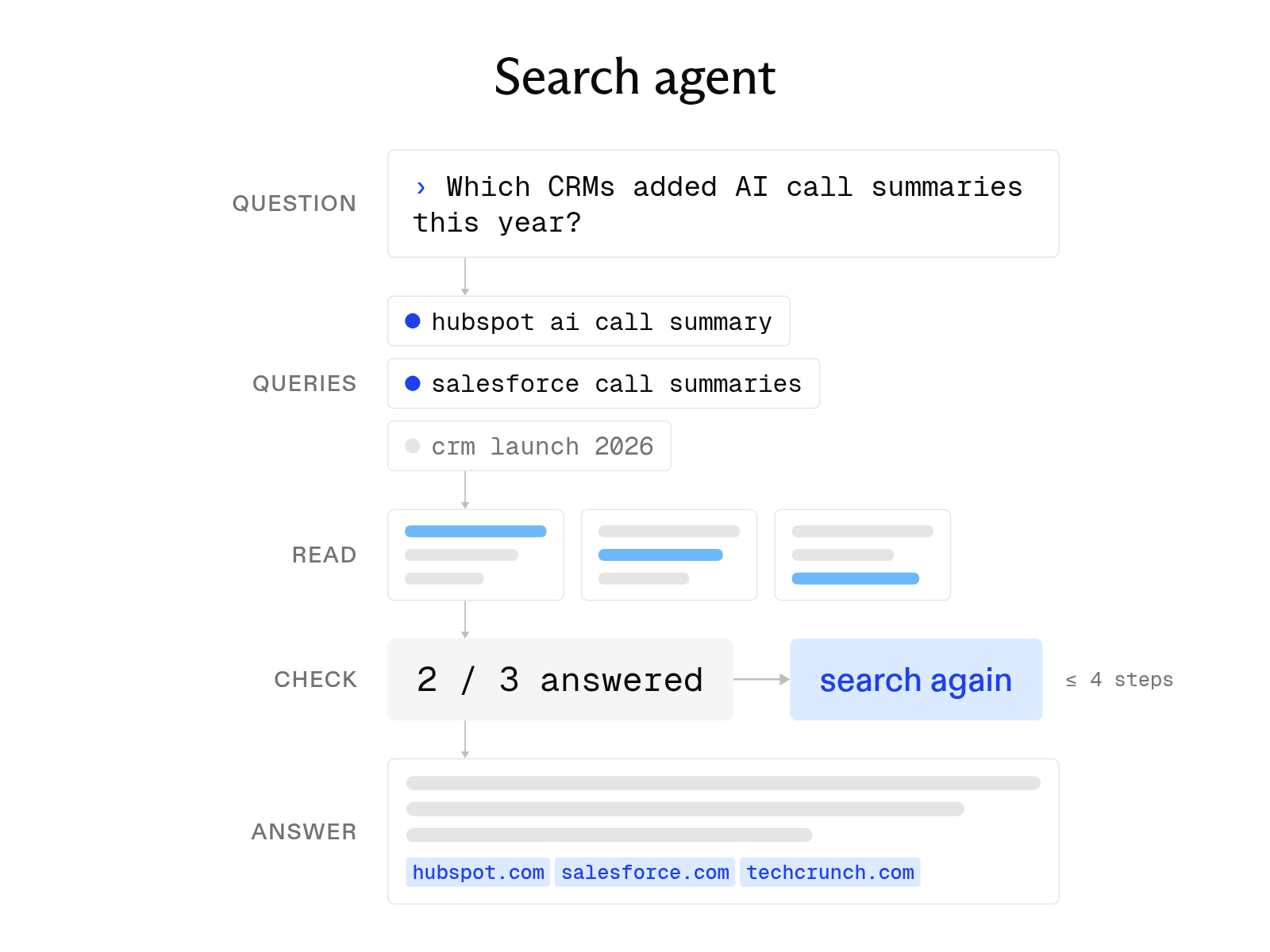
What is a search agent? How they work and how to build one
October 1, 2026
The 8 best web search tools for AI agents in 2026
October 6, 2026
How to build an AI agent with web search
October 6, 2026
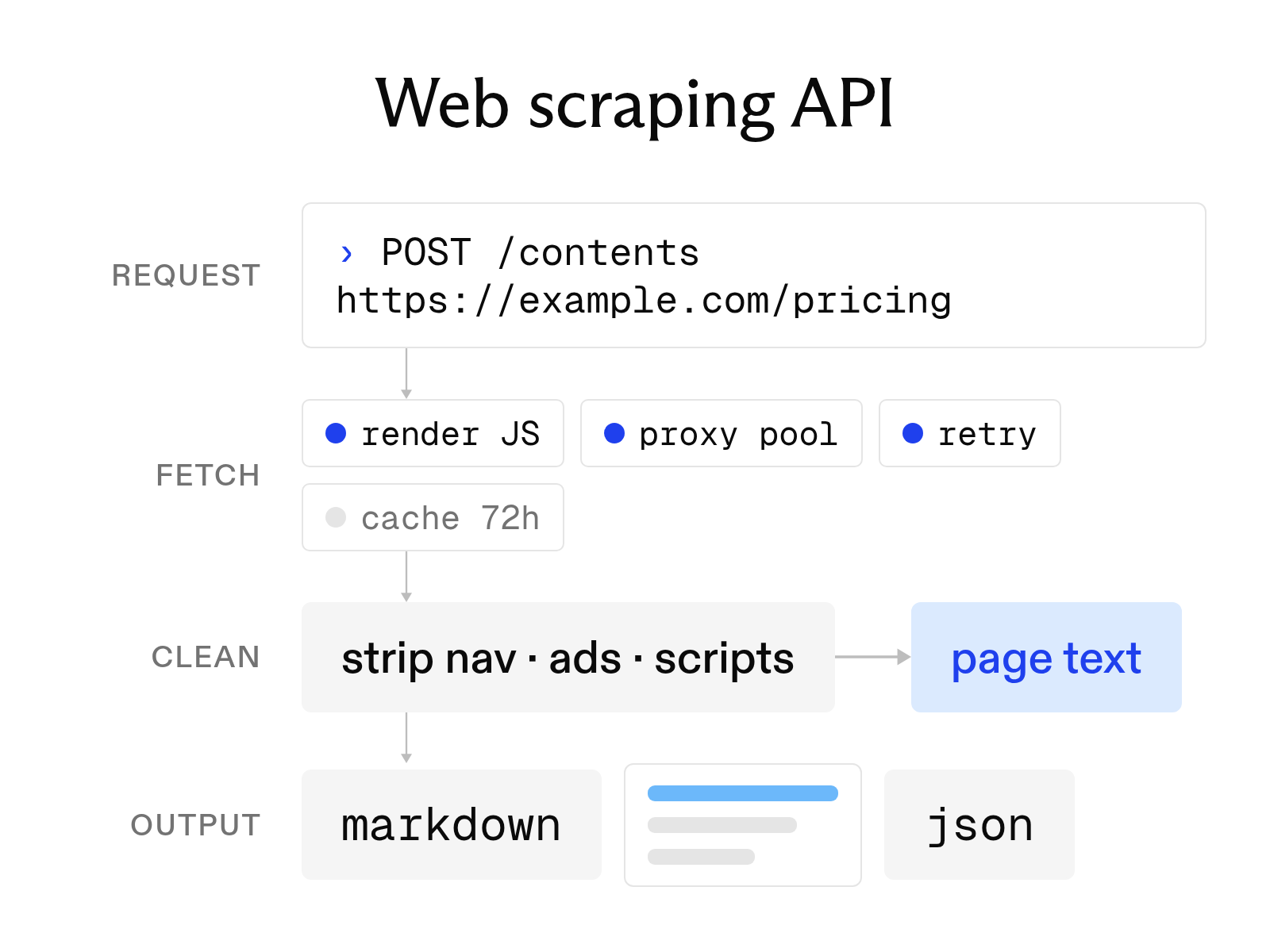
What a web scraping API is and how to choose one
October 6, 2026
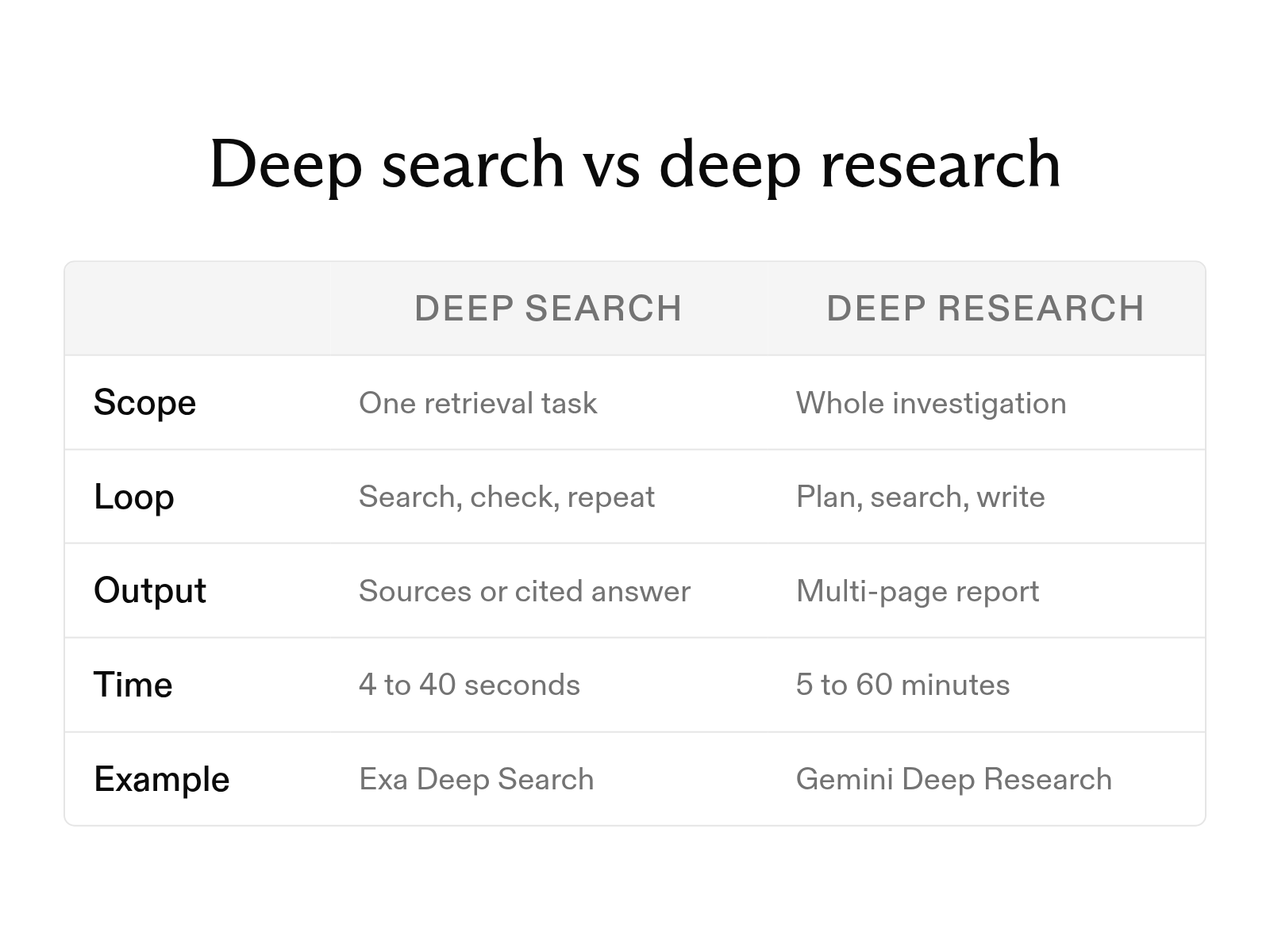
What is deep search, and how does it differ from deep research?
October 6, 2026
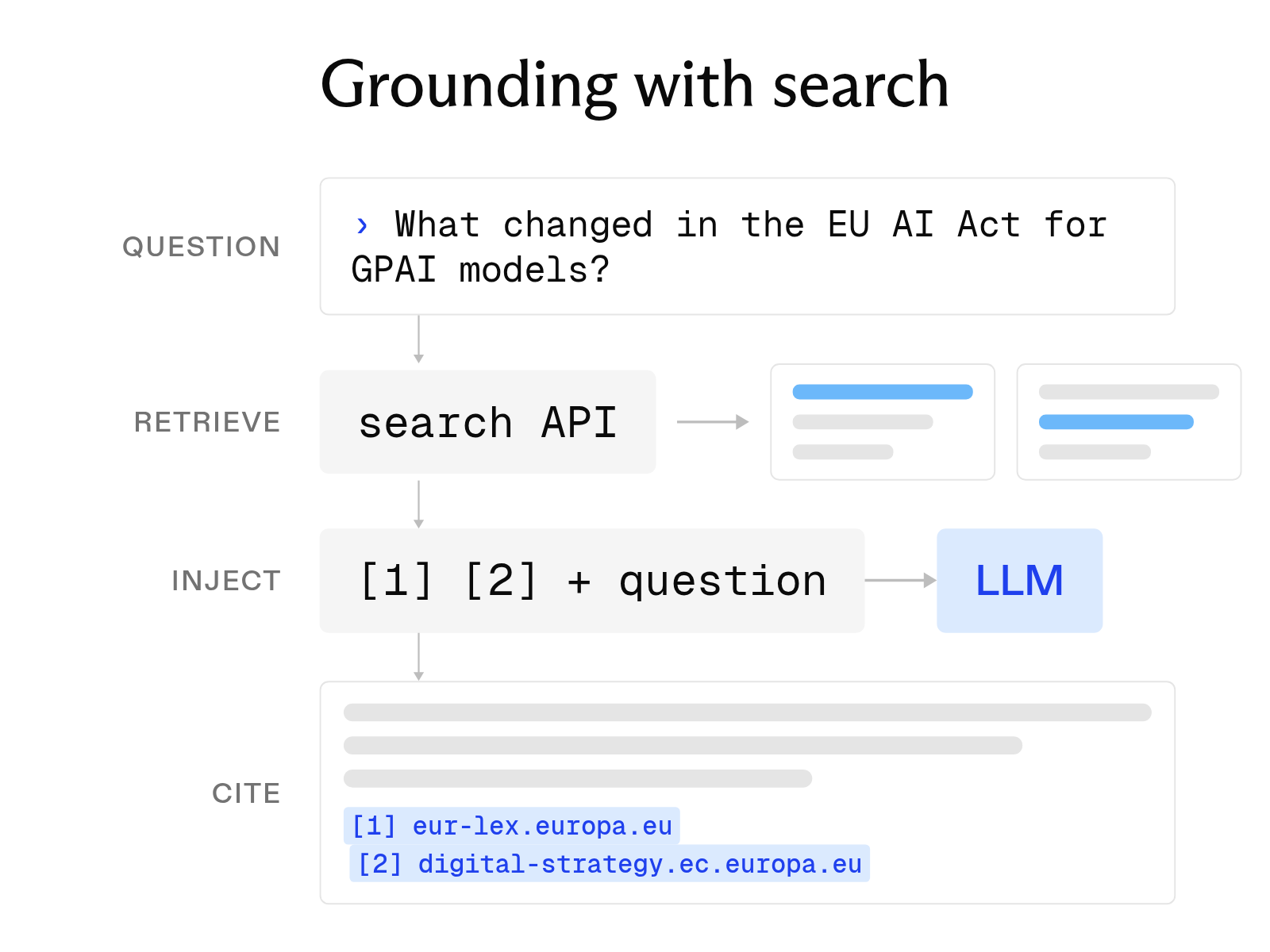
What is LLM grounding, and how does it work with a search API?
October 6, 2026