The 12 best market and competitive intelligence tools in 2026
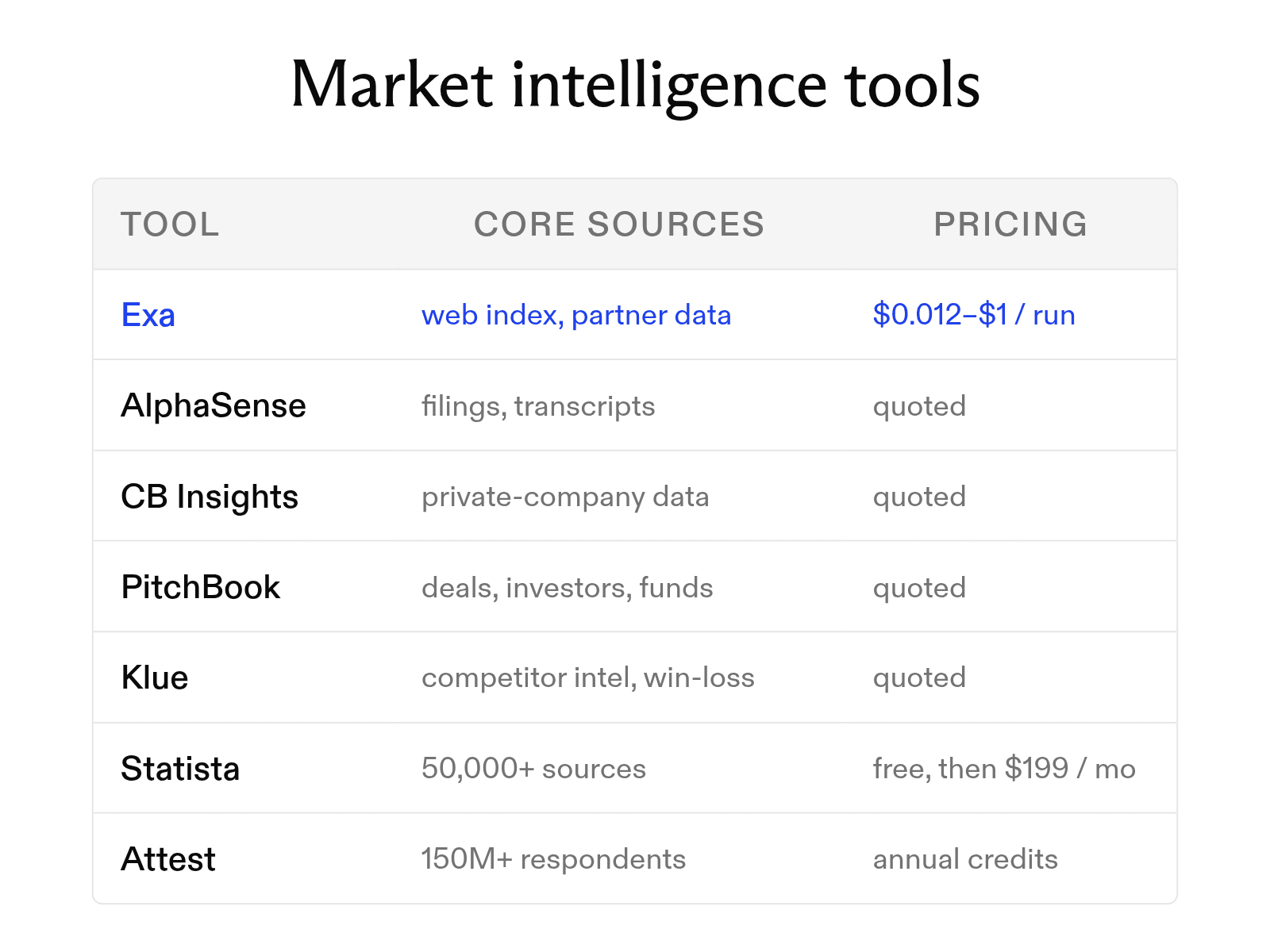

Market intelligence is the evidence behind a decision about a market: its size, growth, competitors, customers, suppliers, and regulation. The right tool depends on the decision. Deal teams, product marketers, and founders need different sources, refresh rates, and pricing.
Competitor analysis, which tracks named rivals only, is a narrower job covered in The 12 best competitor analysis tools in 2026.
At Exa, we build APIs for web search and research. You can use them to build your own market research pipeline and add licensed data when you need it. The other eleven tools fall into three groups: analyst research, competitive intelligence, and market and consumer data platforms. A comparison table and a guide to choosing by job come first.
Market intelligence tools compared
Only Exa and Statista publish prices; the rest quote them, sell credits, or don't publish them.
| Tool | Category | Core sources | Refresh | Pricing | Buyer |
|---|---|---|---|---|---|
| Exa | Custom pipeline | Web index, partner data | Minutes (news); scheduled (Monitors) | Published: $0.012 to $1 per Agent request | Developers at banks and funds |
| AlphaSense | Analyst research | Filings, transcripts, broker research | Real-time (broker research) | Quoted: enterprise or per seat | Banks, consultancies |
| Gartner | Analyst research | Analyst research | Per report | Quoted | IT and business leaders |
| CB Insights | Analyst research | Private-company data, scores | Real-time (market profiles) | Quoted: per seat or by consumption | Corporate strategy |
| PitchBook | Analyst research | Deals, companies, investors, funds | Real-time (live feed and API) | Quoted: by seats and firm type | Bankers, PE, VC |
| Klue | Competitive intelligence | Competitor intel, win-loss interviews | Continuous (collection) | Not published | Product marketing |
| Crayon | Competitive intelligence | Competitor monitoring, news | Daily (inbox) | Quoted | Product marketing |
| Contify | Competitive intelligence | 1 million+ sources | Real-time | Quoted | Product marketing, strategy |
| Kompyte | Competitive intelligence | Websites, reviews, ads, jobs | Daily (AI Daily Summaries) | Not published | Product marketing, sales |
| Statista | Market data | 50,000+ sources | Varies by source | Published: free, then $199 a month | Analysts, marketers |
| Similarweb | Market data | Traffic estimates, analytics | Daily | Quoted: business plans; site data and trial free | Marketers, investors |
| Attest | Consumer surveys | 150 million+ respondents | Per survey | Credits: annual plans | Brand and insights teams |
How to choose a market intelligence tool
Each team below needs a different mix of licensed data, competitor monitoring, and list building.
-
Deal and corporate strategy teams. A pitch book needs company comparisons, precedent transactions, and management commentary. Use PitchBook and AlphaSense for licensed data, and an Exa Agent run to build a cited comparison set or target list for an analyst to review before it goes in the deck.
-
Product marketing. The job is keeping sales reps ahead of named rivals in active deals. Klue and Crayon deliver battlecards through the CRM and measure win rates. Choose Klue when win-loss interviews matter most, Crayon for daily monitoring, and Contify when competitors publish in many languages.
-
Founders. A founder raising a round needs a credible market size and competitor set without an enterprise plan. Start with Statista, though its Market Insights market sizes require the Professional plan. Add Attest for questions no publisher answers, and use an Exa Agent run to build a competitor list with a citation for every row.
Analyst research platforms
These four sell licensed content and proprietary data through enterprise contracts.
1. AlphaSense
AlphaSense is an AI search platform covering more than 500 million documents: company filings, earnings call transcripts, news, regulatory documents, expert transcripts, and equity research from more than 1,000 sell-side and independent firms. It reports that 90% of the top investment banks use it. It answers "What did management and the analysts say about this company?"
2. Gartner
Gartner sells subscription research and analyst access. Its Magic Quadrant reports rate vendors in a technology market on ability to execute and completeness of vision, placing them in four groups: Leaders, Challengers, Visionaries, and Niche Players. Gartner answers "Which vendors lead this technology market?"
3. CB Insights
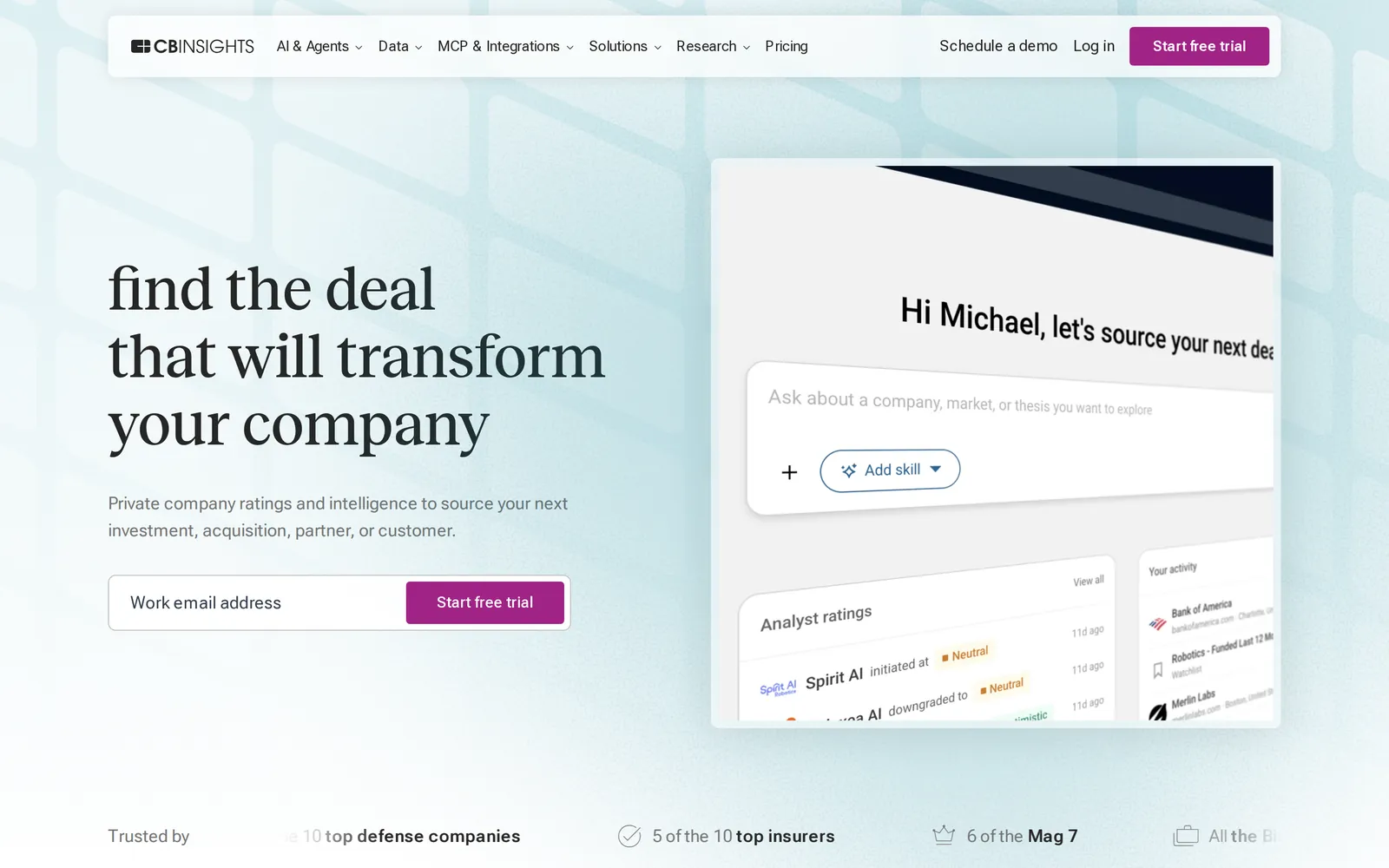
CB Insights covers private companies and technology markets. Its web app, Strategy Terminal, searches more than 13 million companies and 1,700 markets, and proprietary measures such as Mosaic Score rate a private company's health and growth potential. It answers "Which private companies are gaining ground in this market?" The Terminal is priced per seat; the MCP, API, and data feeds by consumption.
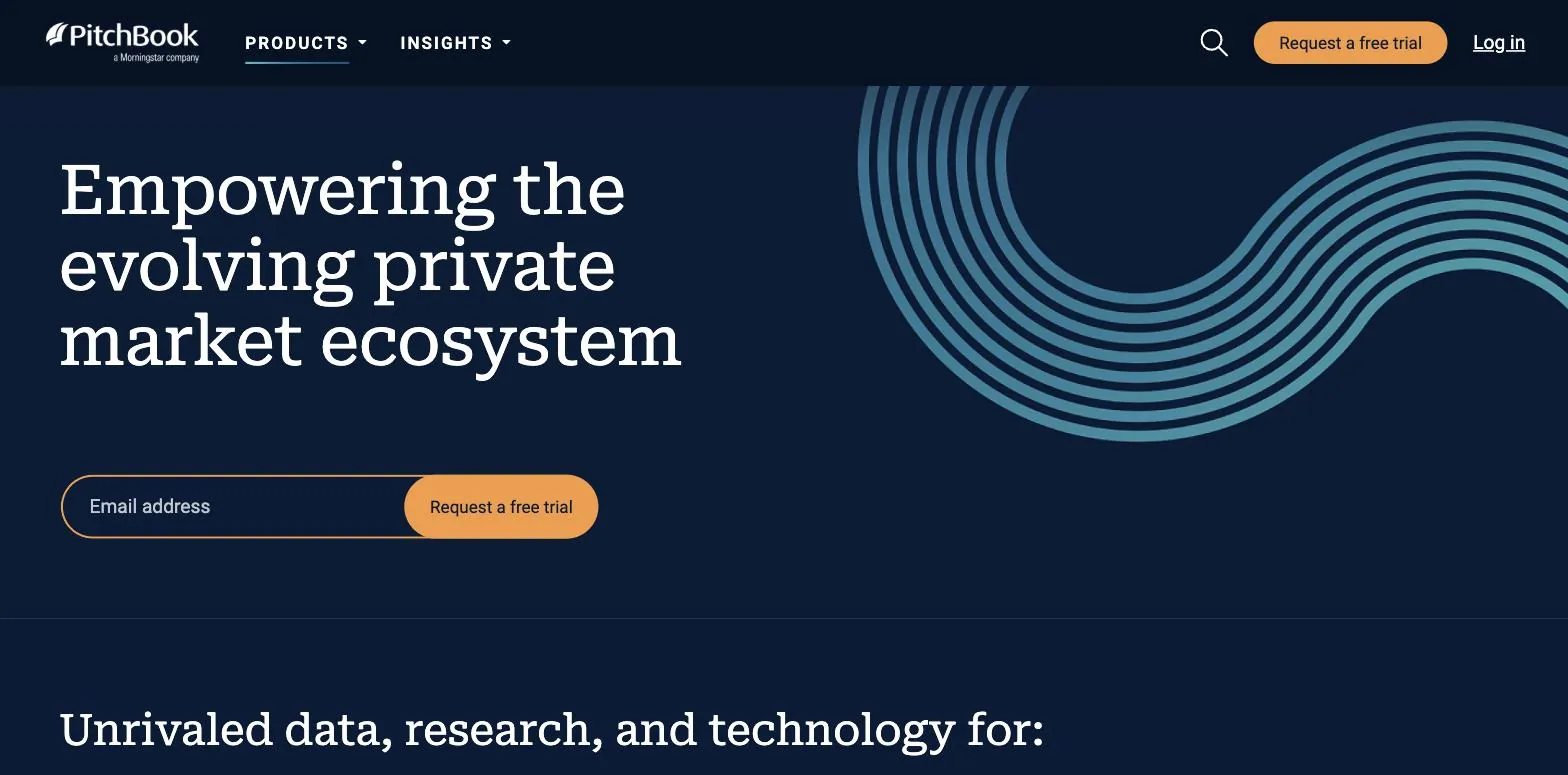
4. PitchBook
PitchBook tracks private capital markets, including more than 12.7 million companies, 3.1 million deals, 634,000 investors, and 170,000 funds. Bankers use it for deal histories, valuation multiples, and investor lists, and its Excel and PowerPoint plugins pull data straight into a model or deck. It answers "What did comparable deals trade at, and who funded them?"
Competitive intelligence platforms
Product marketing teams buy these four. Each collects competitor signals, turns them into battlecards (one-page guides for competing against a named rival), and delivers them through tools sales reps already use.
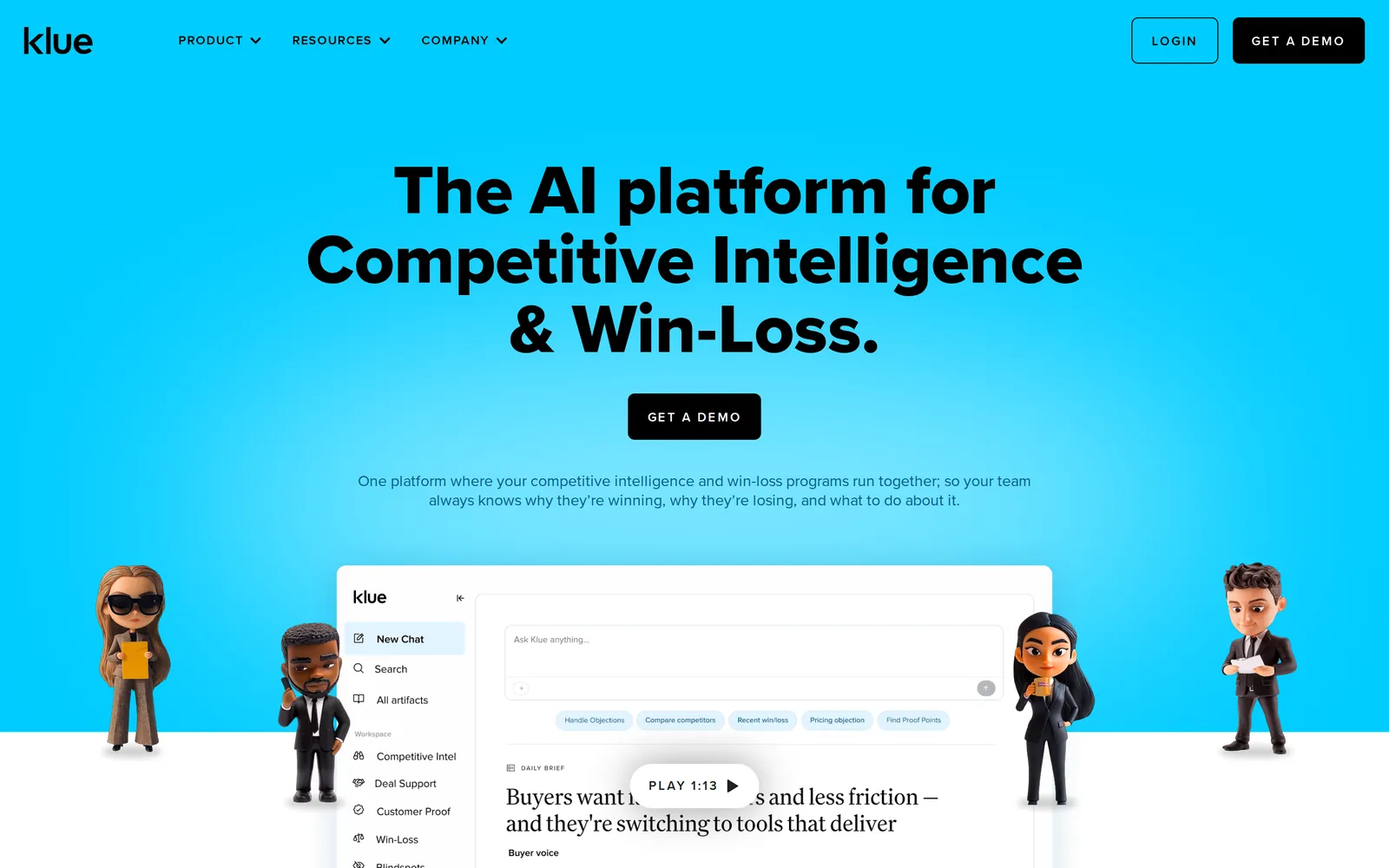
5. Klue
Klue collects, curates, and shares competitive intelligence, and Compete Agent automates the collection. Its win-loss suite includes structured interviews run by Klue's analysts and an AI Interviewer that holds short voice conversations with buyers and sellers. Klue doesn't publish prices; its pricing URL redirects to the homepage.
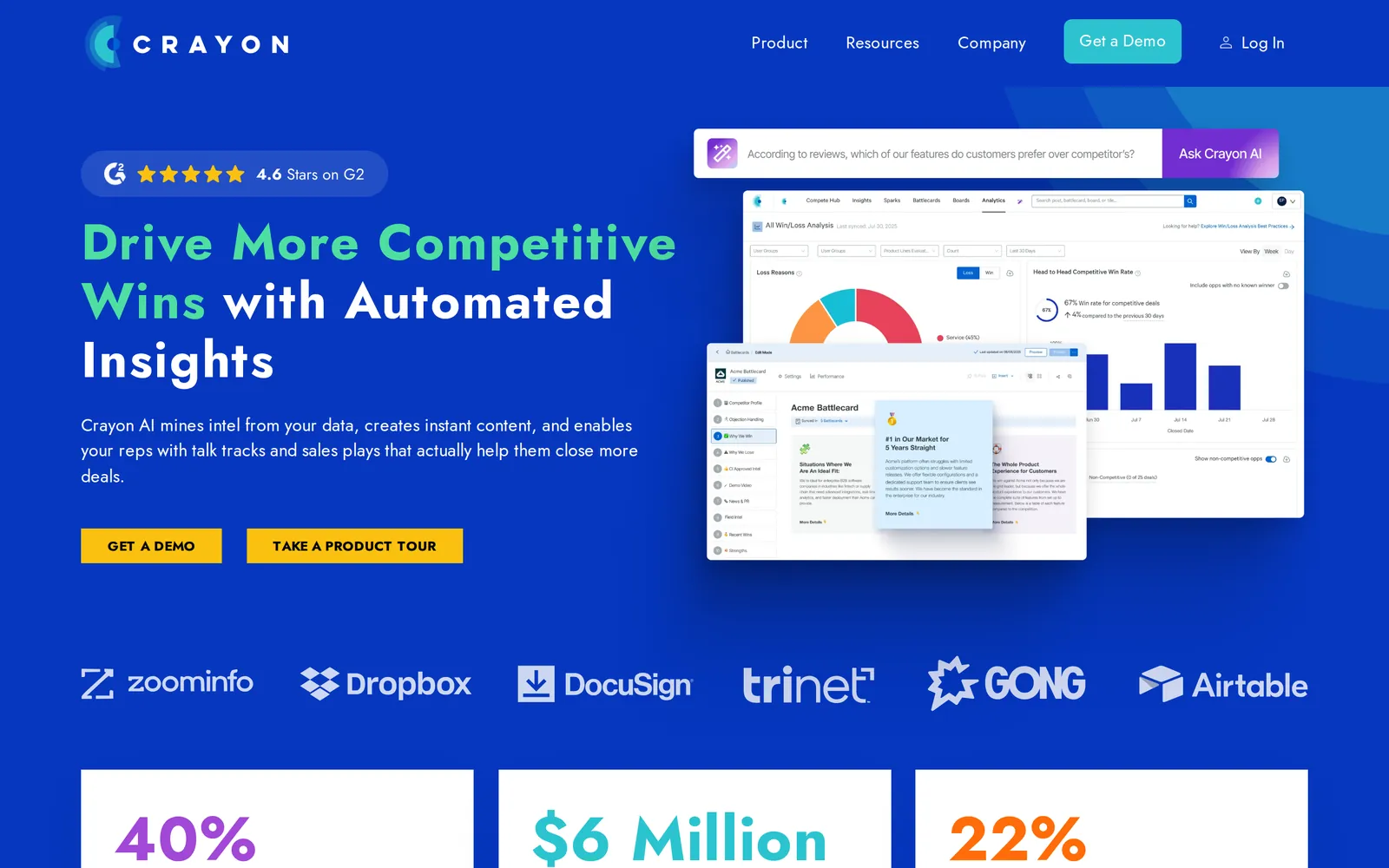
6. Crayon
Crayon monitors competitors and sends important changes to an inbox each morning, with AI summaries of news articles and an importance score on each change. Battlecards appear in Salesforce, Slack, and Highspot (a sales enablement platform), and win-loss analysis shows which competitors give sales the most trouble. Pricing comes through an estimate form.
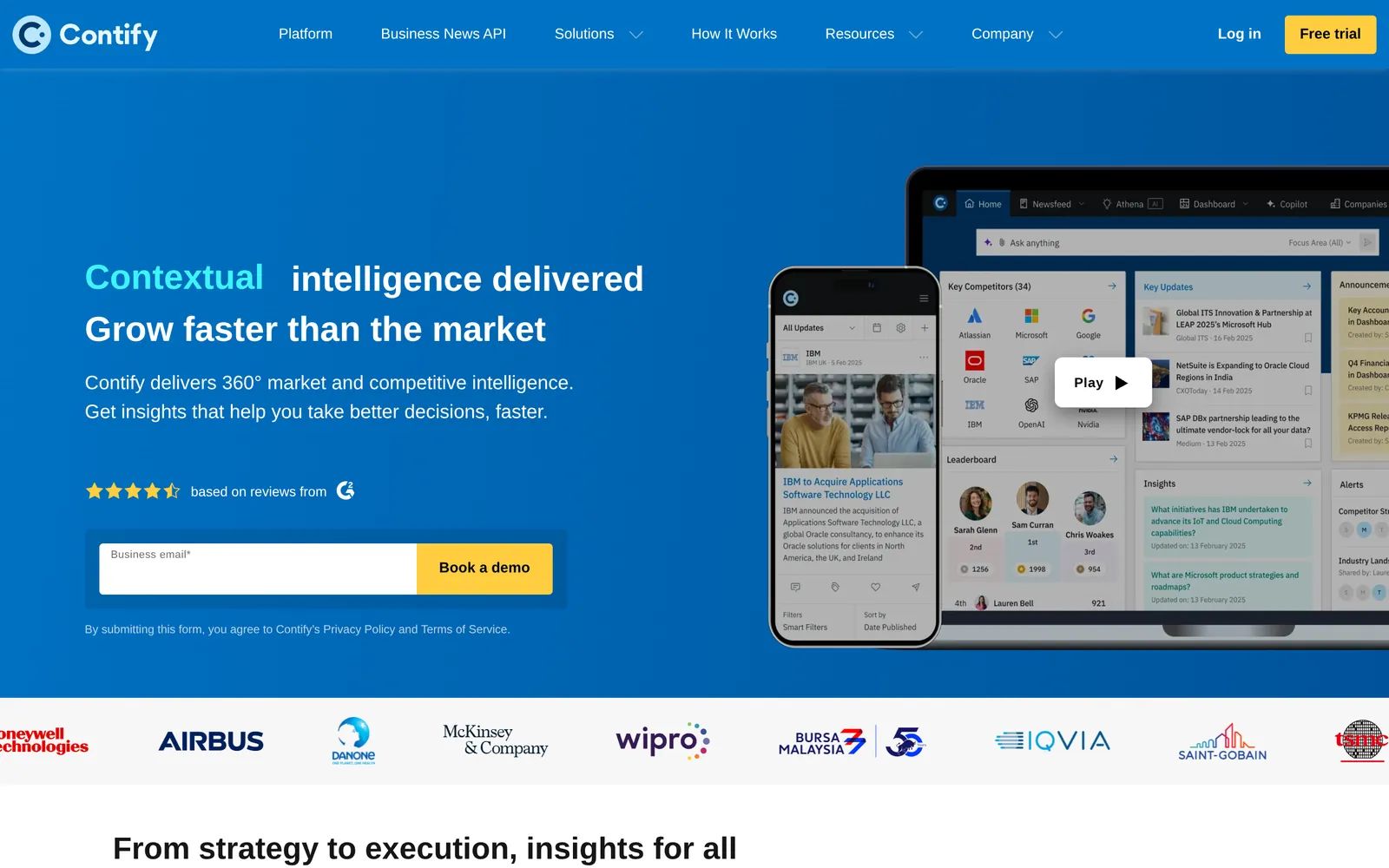
7. Contify
Contify gathers information from more than 1 million vetted sources in over 117 languages, including news outlets, company websites, SEC filings, and social media. Its insights engine, Athena AI, extracts business facts from articles and updates dashboards, battlecards, and timelines. A Business News API feeds teams' own systems. Pricing comes through a contact form.
8. Kompyte
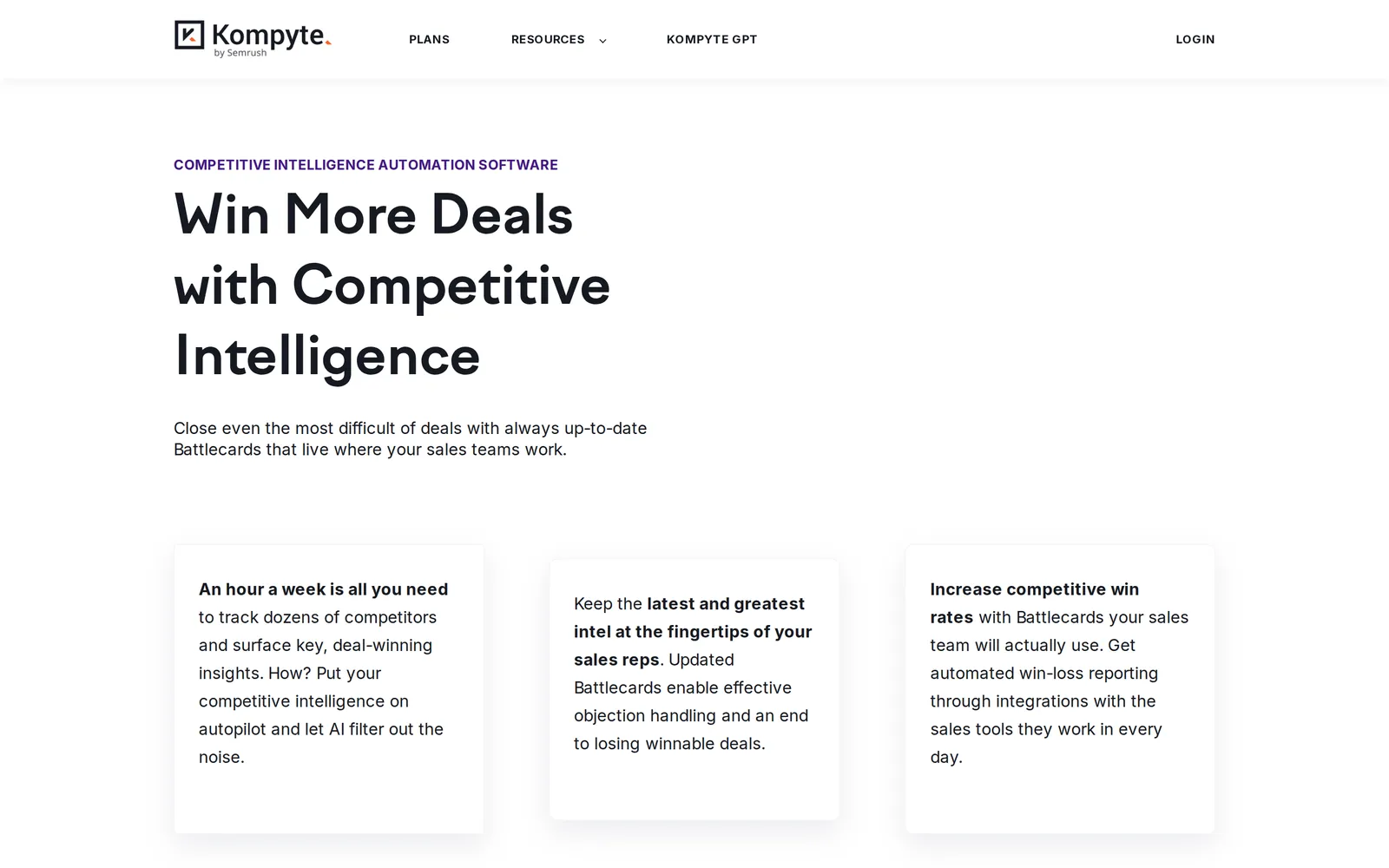
Kompyte is a Semrush product; Semrush announced the acquisition in February 2022 and is now owned by Adobe. Kompyte tracks competitor websites, reviews, content, social posts, ads, and job postings, and its AI Daily Summaries filter out changes that don't matter. Battlecards sync both ways with CRMs, and automated win-loss reports tie competitive deals to revenue.
Market and consumer data platforms
These three produce numbers differently: Statista republishes them, Similarweb models them, and Attest collects them from respondents. A deck's footnote should say which, so readers can verify the figure.
9. Statista
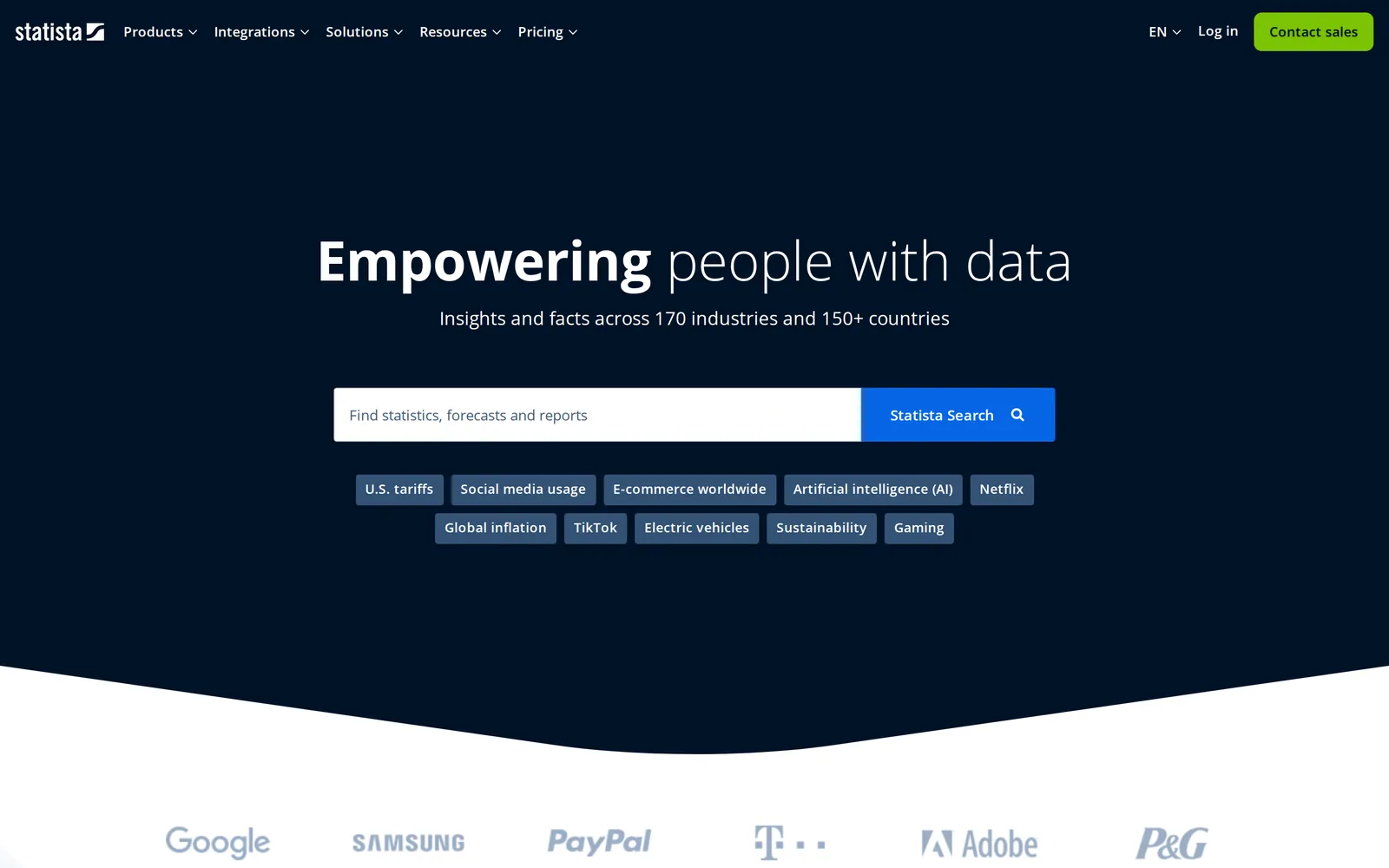
Statista compiles statistics on more than 80,000 topics from over 50,000 sources across 170 industries. Its Market Insights product gives market sizes and forecasts for more than 1,000 markets in over 190 countries and regions. Trace each figure to its original publisher before it goes in a deck. The Basic plan is free; Starter costs $199 a month and Personal $649 a month, both billed annually.
10. Similarweb
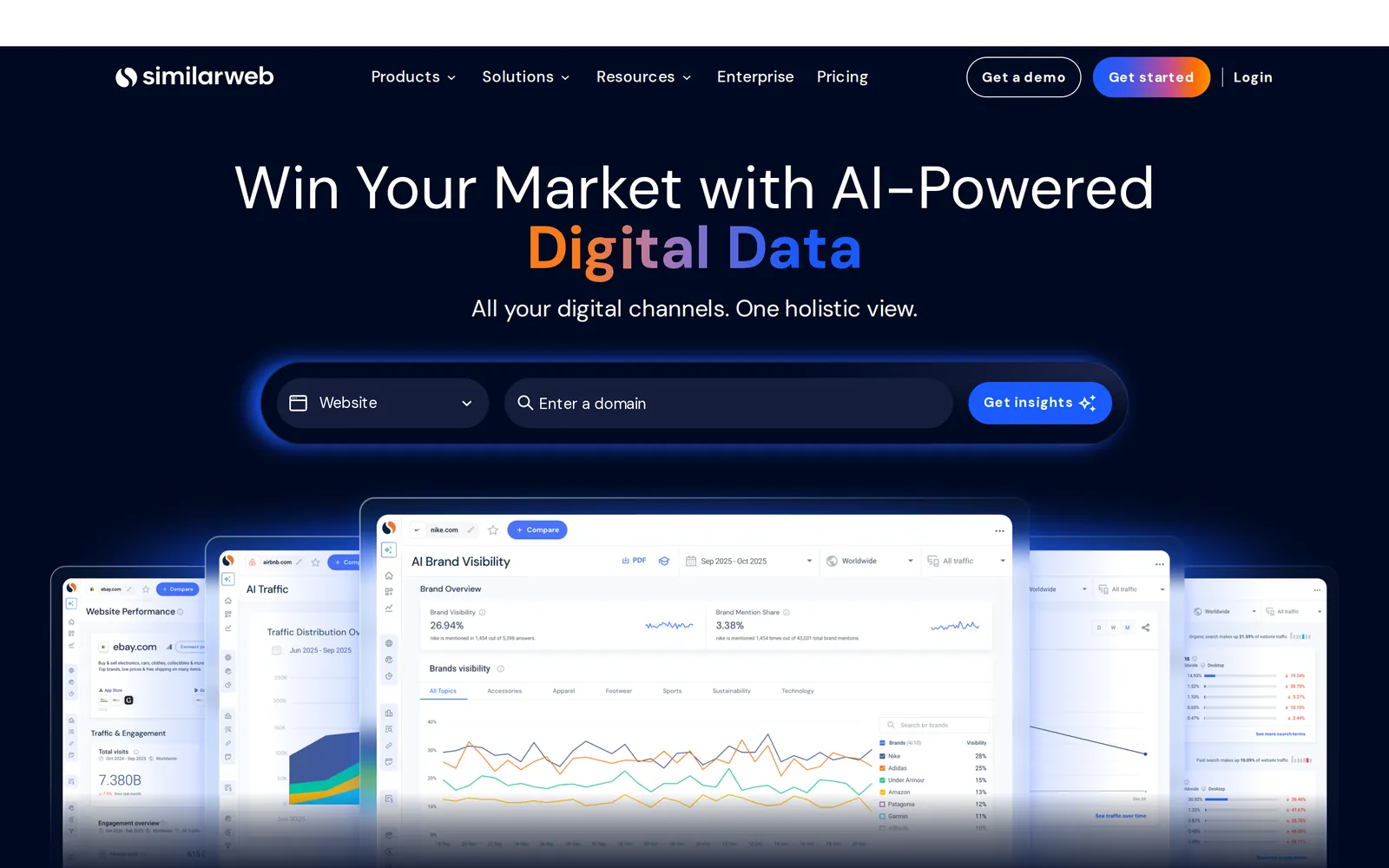
Similarweb estimates website and app traffic by modeling first-party analytics from site owners, public and partner data, and data from its products installed on millions of devices. Stock Intelligence is a separate package for hedge funds, asset managers, private equity and venture firms, and quantitative funds.
11. Attest
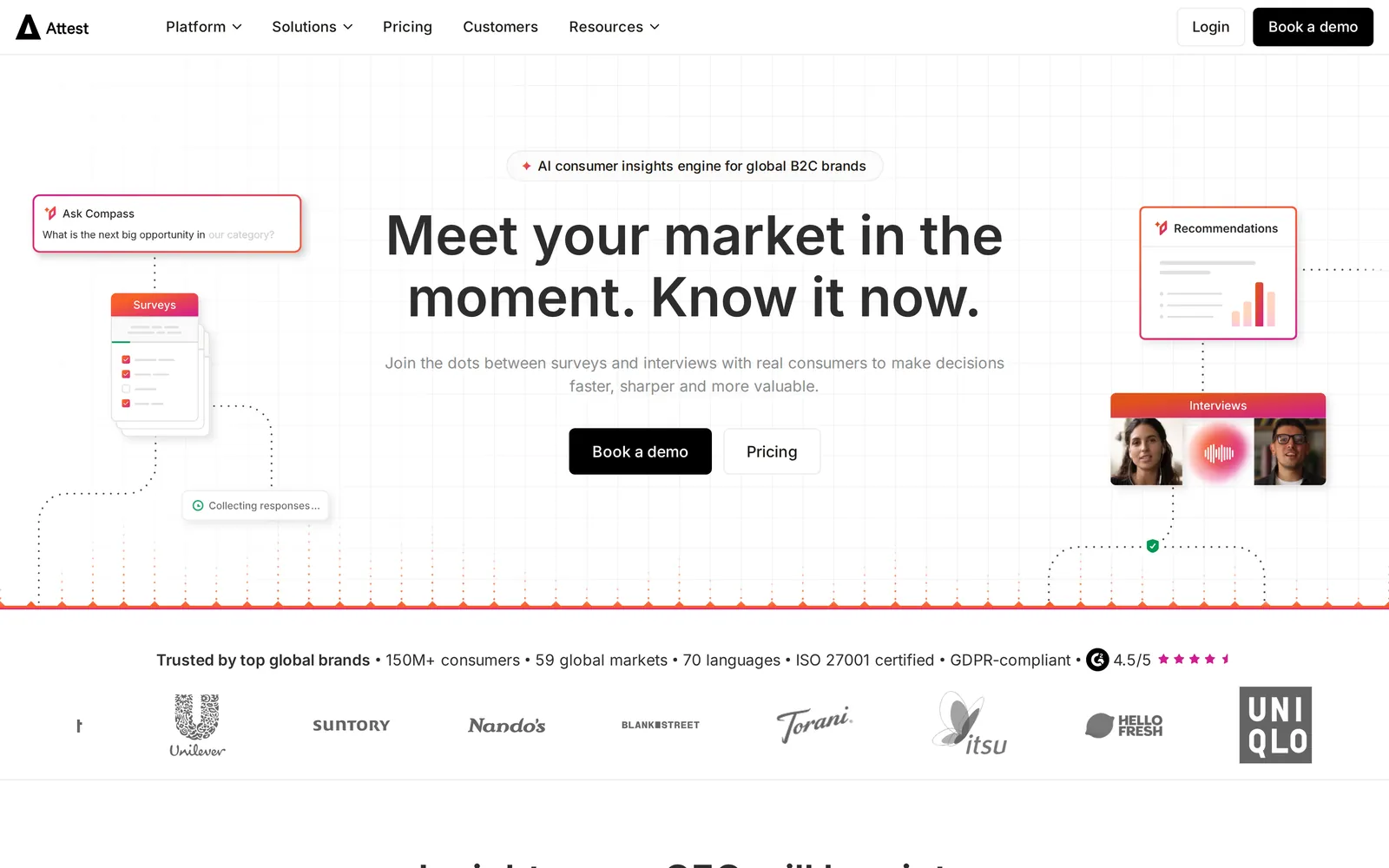
Attest sends the survey questions you write to a multi-panel audience of more than 150 million consumers in 59 countries, and you choose the sample. One credit is one person's answer to one question, and the Basic subscription includes up to 50,000 credits and unlimited seats.
Custom research pipelines
Teams build custom pipelines when no vendor tracks their market, when the same question repeats every week, or when the output has to land in an internal database or model.
12. Exa
We built Exa for this work. Our Agent API takes a plain-English task and an outputSchema defining the JSON you need. The Agent splits a list-building task into parallel subtasks, checks each candidate against the stated criteria, and returns validated JSON in output.structured, with citations in output.grounding.
from exa_py import Exa

exa = Exa()  # reads EXA_API_KEY

run = exa.agent.runs.create(
    query="Build a comp set: U.S.-listed public companies that sell payroll or HR software to small and midsize businesses.",
    effort="medium",
    data_sources=[{"provider": "financial_datasets"}],
    output_schema={
        "type": "object",
        "required": ["comps"],
        "properties": {"comps": {"type": "array", "maxItems": 8, "items": {
            "type": "object",
            "required": ["company", "ticker", "fiscal_year", "revenue_usd"],
            "properties": {
                "company": {"type": "string"},
                "ticker": {"type": "string"},
                "fiscal_year": {"type": "string"},
                "revenue_usd": {"type": ["number", "null"]},
            }}}},
    },
)
run = exa.agent.runs.poll_until_finished(run.id)
print(run.output.structured)
print(run.output.grounding[0])
Our run returned six companies in 31 seconds for $0.10. The first row and its citations:
{"ticker": "ADP", "company": "Automatic Data Processing, Inc.", "fiscal_year": "FY2026", "revenue_usd": 21947400000}
{"field": "structured.comps[0]", "citations": [{"url": "https://www.sec.gov/Archives/edgar/data/8670/000000867026000025/q4fy26exhibit99.htm", "title": "ADP Fiscal 2026 Results"}, {"url": "https://www.sec.gov/Archives/edgar/data/8670/000000867025000037/adp-20250630.htm", "title": "ADP 2025 Form 10-K"}], "confidence": "medium"}
The data_sources line connects Financial Datasets (company financials, SEC filings, and valuation metrics) through Exa Connect, which adds partner databases to an Agent run. Exa Monitors repeats a search on a schedule and sends only new results to a webhook, so the list can update weekly. Licensed analyst reports and survey panels, such as Gartner research, PitchBook deal data, and Attest surveys, still have to come from those vendors.
Search costs $7 per 1,000 requests; full prices are on our pricing page.
FAQ
What is the difference between market, competitive, and business intelligence?
Market intelligence covers a whole market. Competitive intelligence tracks named competitors for sales teams. Business intelligence analyzes internal data, such as revenue and pipeline figures in a dashboard. Use analyst research platforms for market questions and competitive intelligence platforms for rivals.
Cheers,
Keep learning
Browse all Learn articles →
The 12 best competitor analysis tools in 2026
November 24, 2026
How to monitor a competitor's website traffic
November 24, 2026
What is a deep research API, and how do you build with one?
October 20, 2026
The 12 best data enrichment platforms in 2026
November 24, 2026
The 8 best enrichment APIs in 2026
October 19, 2026
How to get structured outputs from a search API
November 24, 2026