The 12 best competitor analysis tools in 2026
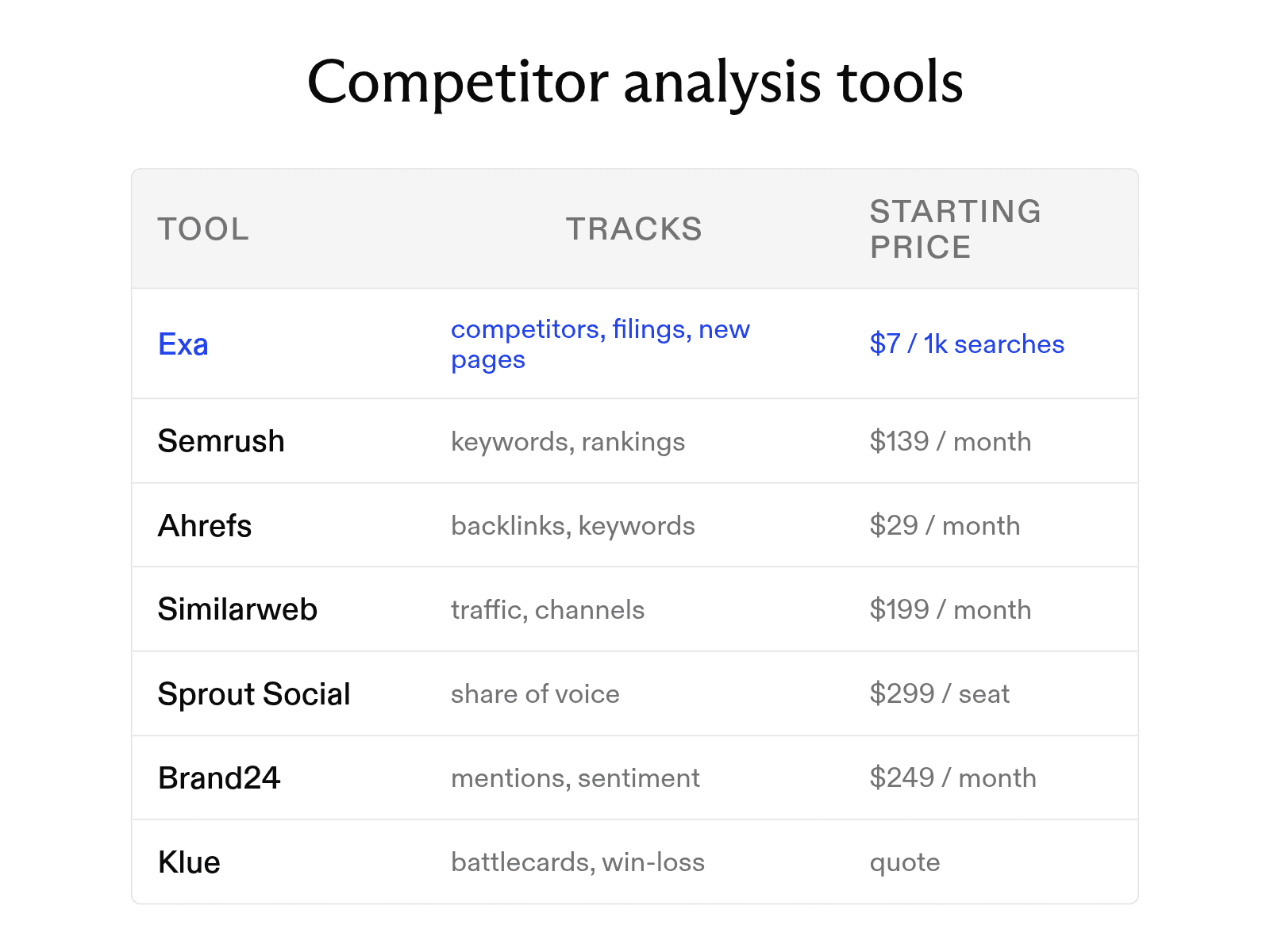

Competitor analysis tools show what a rival does in search, on its website, in its ads, and on social channels. Marketing teams use them to track competitors; investors and analysts use them in due diligence to find a company's competitors and see what they release.
At Exa, we build a web search API for AI applications. You can use Exa to find competitors and research their products, news, and filings.
We compare Exa and 11 other tools by what they track, what’s free, and what they cost. For analyst research and market data, read The 12 best market and competitive intelligence tools in 2026.
Competitor analysis tools compared
Prices are each tool's lowest monthly price billed month to month, or the annual-billed price where that's the only one published.
| Tool | Category | Tracks | Free option | Starting price | Best fit |
|---|---|---|---|---|---|
| Semrush | SEO and traffic | Keywords, rankings, AI search | Free plan: 10 reports a day | $139 a month | SEO leads |
| Ahrefs | SEO and traffic | Backlinks, keywords | Free plan: own sites only | $29 a month | SEO leads |
| SE Ranking | SEO and traffic | Rankings, AI prompts | Free trial: 14 days | $129 a month | Agencies |
| Similarweb | SEO and traffic | Traffic, channels | Free trial | $199 a month | Analysts |
| Sprout Social | Social | Share of voice, sentiment | Free trial: 30 days | $299 a seat a month, billed annually | Social teams |
| Brand24 | Social | Mentions, sentiment | Free trial: 14 days | $249 a month | Small teams |
| Hootsuite | Social | Competitor sentiment | Free trial: 14 days | $99 a user a month, billed annually | Small teams |
| Klue | CI platform | Battlecards, win-loss | None: demo only | Quote from sales | Product marketing |
| Crayon | CI platform | Site and pricing changes | None: demo only | Quote from sales | Product marketing |
| AlphaSense | CI platform | Filings, research, transcripts | Free trial: on request | Quote from sales | Investors, strategy teams |
| Exa | Build your own | Competitors, filings, new pages | Free credits: $10 a month | $7 per 1,000 searches | Analysts, developers |
| Zapier | Build your own | Feed items | Free plan: 100 tasks a month | $19.99 a month, billed annually | Teams without engineers |
SEO and traffic
These tools show how a competitor's site performs in search. Each uses its own data, so two tools can report different figures for the same site.
1. Semrush
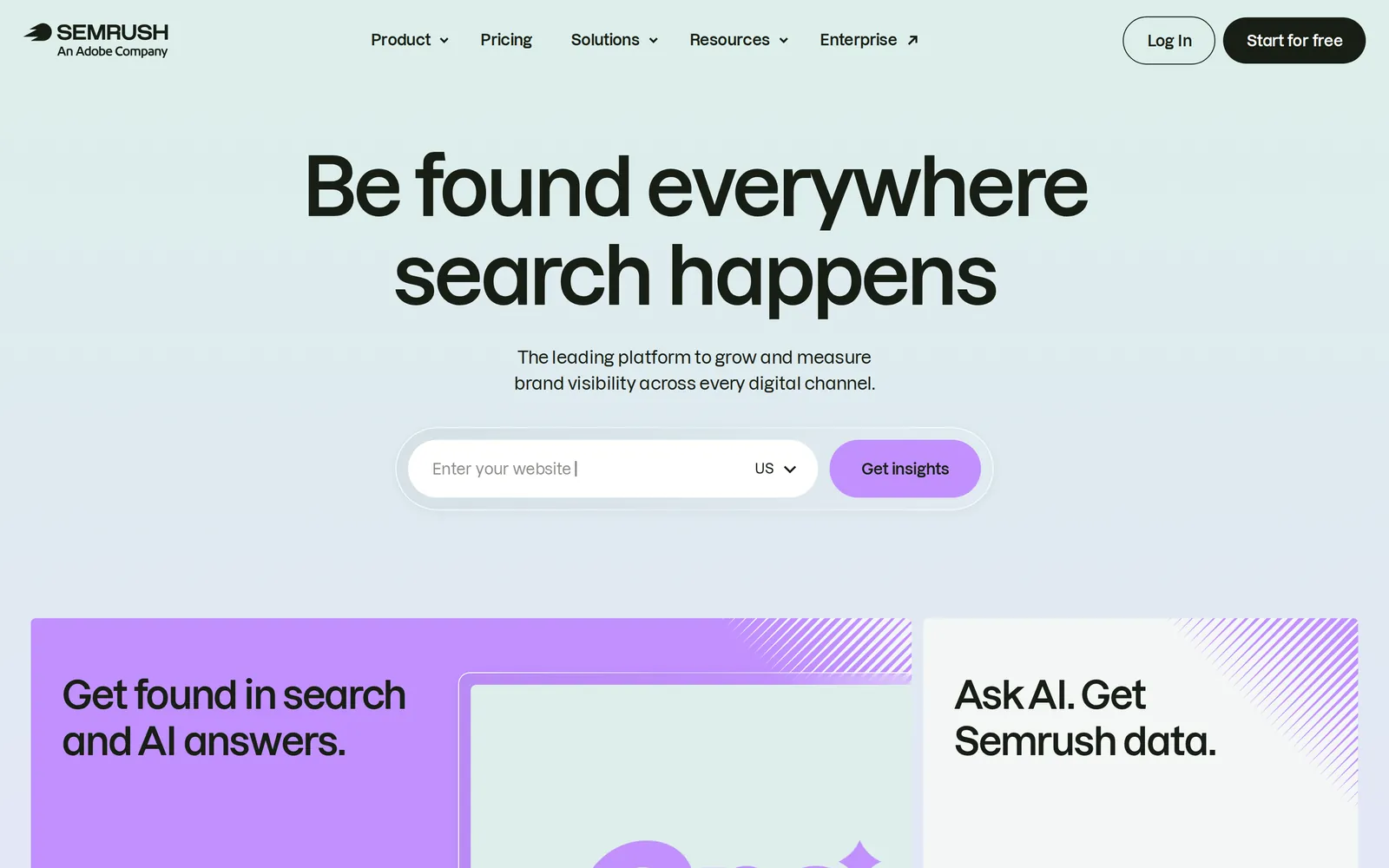
Semrush is an SEO and marketing suite. Its SEO plan covers keyword research, competitor analysis, position tracking, site audits, and AI search visibility tracking for 5 websites and 500 keywords tracked daily, at $139 a month or $117.33 billed annually. A seven-day trial opens the paid tools.
2. Ahrefs
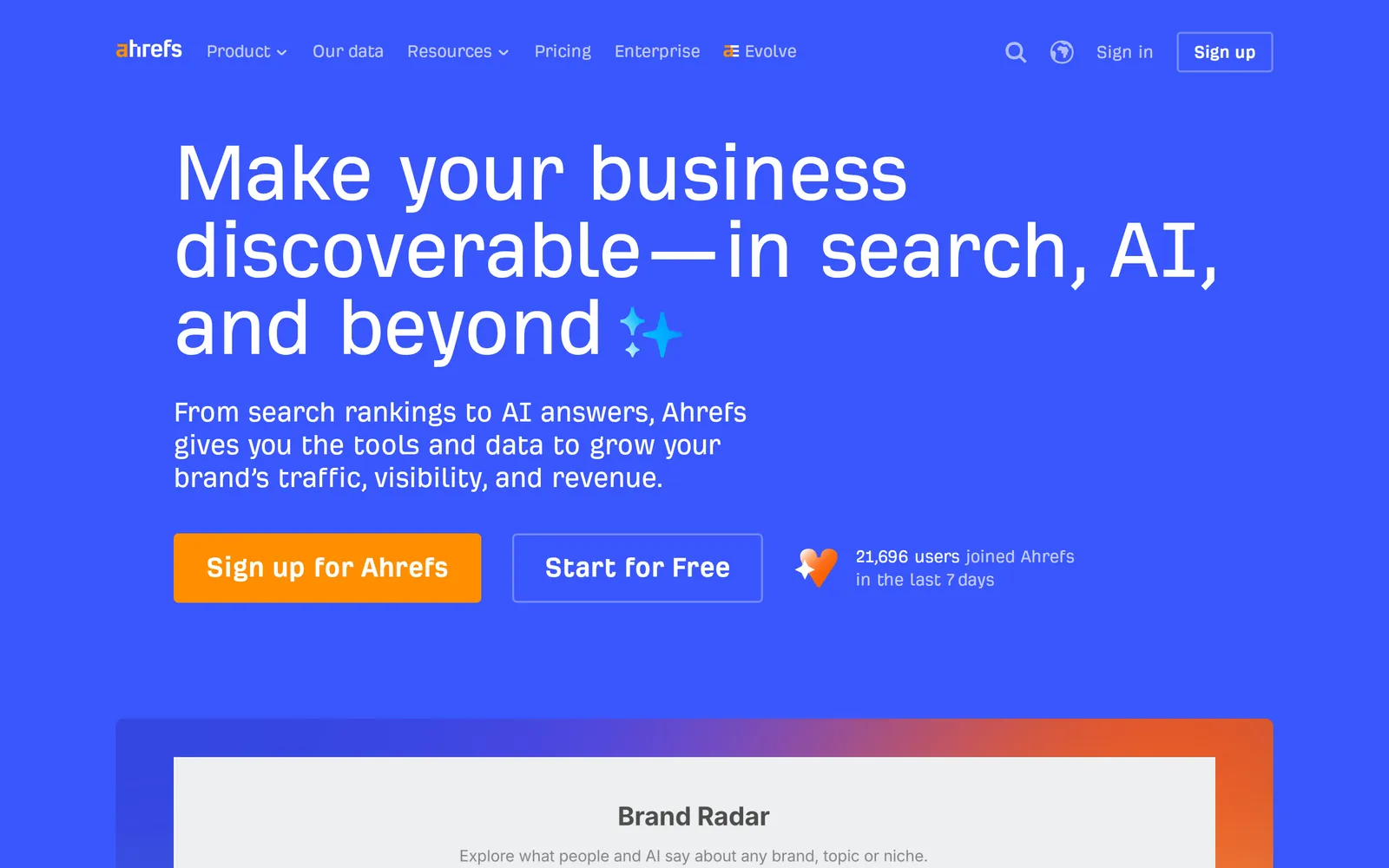
Ahrefs is an SEO platform with its own web crawler, which Ahrefs calls the world's second-most active. Site Explorer, its competitor research tool, reports a site's backlinks and ranking keywords. Starter costs $29 a month; Lite, at $129, adds Site Audit, Rank Tracker, and Competitive Analysis. There's no free trial, but Ahrefs Free gives site owners limited Site Explorer and Site Audit access for their own sites.
3. SE Ranking
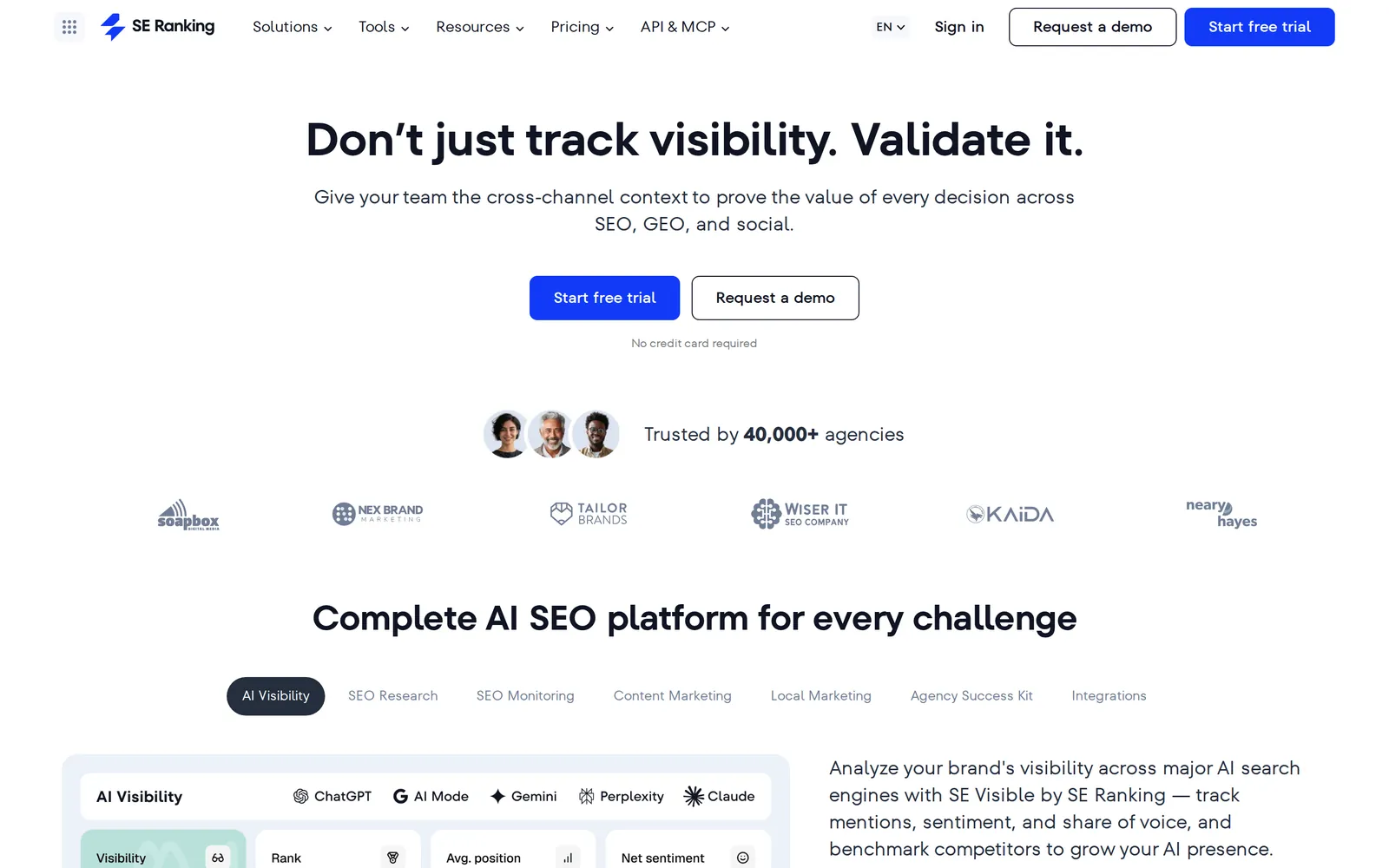
SE Ranking is an SEO platform for marketing teams and agencies. Core costs $129 a month, or $103.20 billed annually, for 10 projects, 2,000 keywords, 25 AI prompts tracked daily, and unlimited keyword, competitor, and backlink research. Growth, at $279 a month, adds page change monitoring. The free trial needs no credit card.
4. Similarweb
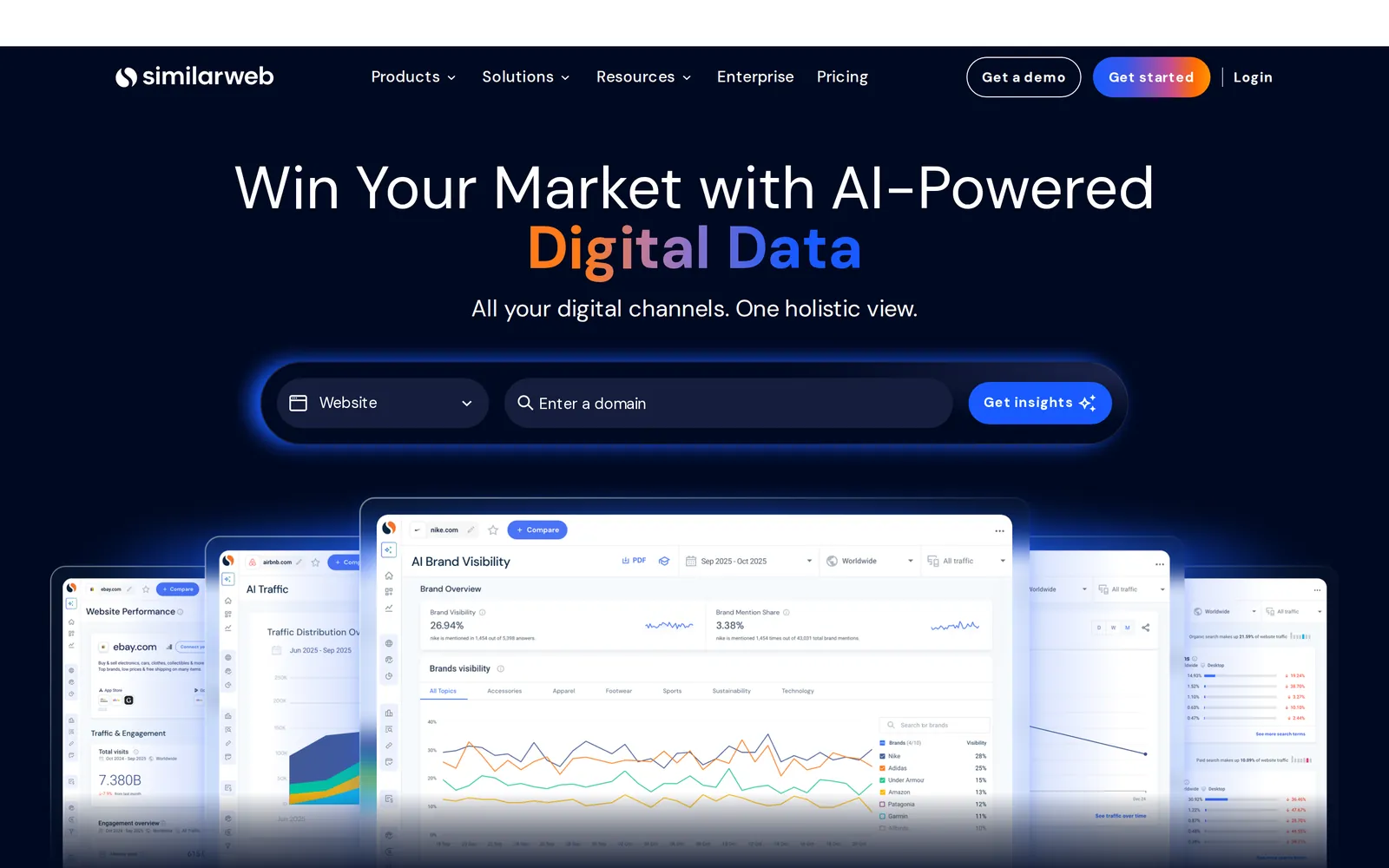
Similarweb estimates website traffic. Its Competitive Intelligence plan ($199 a month, or $125 billed annually) reports a site's traffic, engagement, audience demographics, and marketing channels, and sends competitor alerts. The top self-serve plan, at $649 a month, adds ad intelligence with ad spending data. Analysts can compare traffic trends for a due diligence target and its rivals. Through Exa Connect, you can use Similarweb traffic data alongside web search in an Exa Agent run.
Social and brand tracking
These tools count brand mentions, analyze sentiment, and measure share of voice: how much of the conversation is about your brand versus competitors.
5. Sprout Social
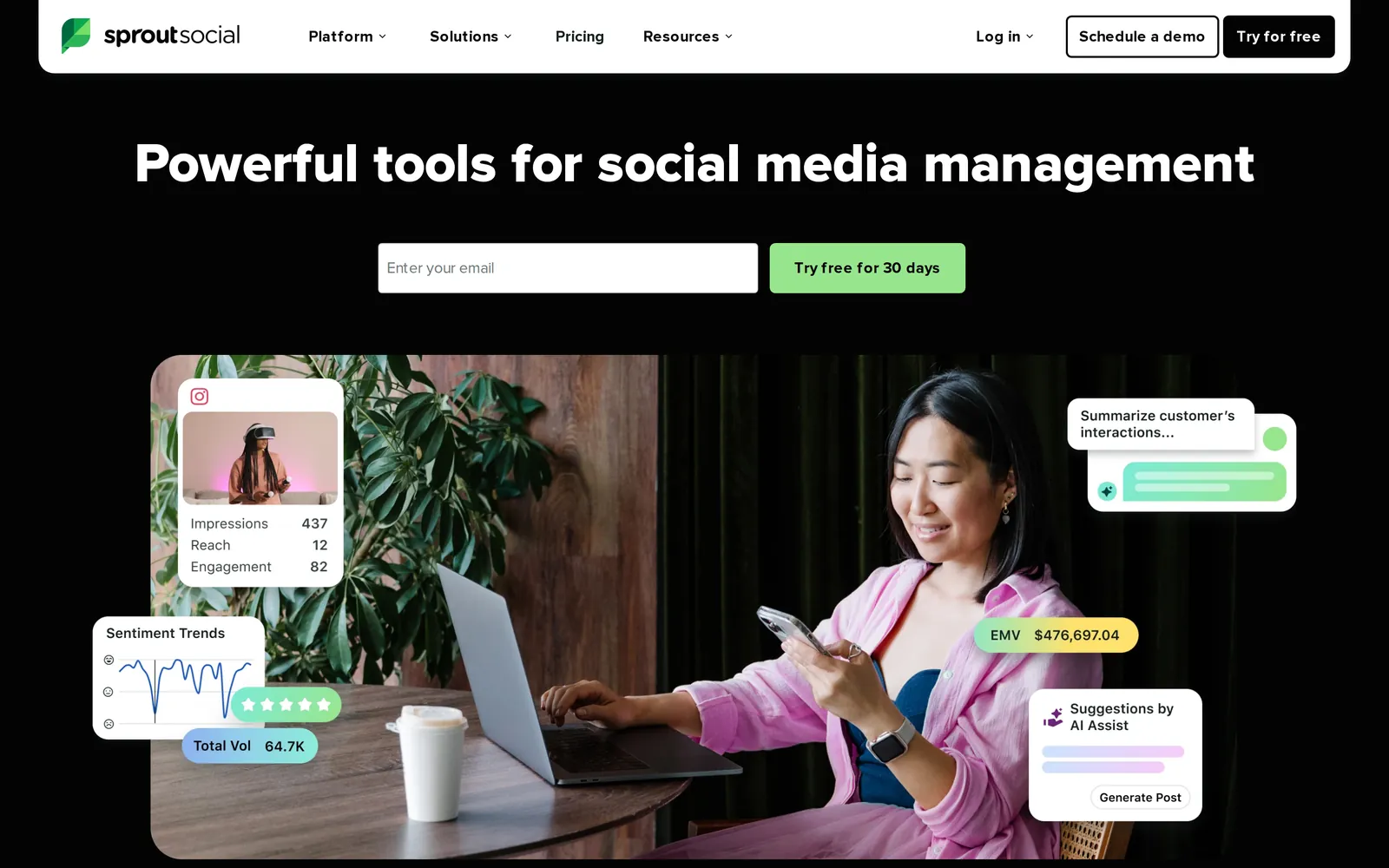
Sprout Social is a social media management platform for publishing, messaging, and reporting. Competitor reports start with the Professional plan. Listening, an add-on for Standard and higher plans, tracks share of voice, sentiment, and sudden volume spikes. The free trial needs no credit card.
6. Brand24
Brand24 is a media monitoring tool that collects mentions from social media, news, blogs, and review sites. Its Comparison tab sets your brand's mentions, sentiment, reach, and share of voice against competitors'. The Individual plan ($249 a month, or $199 billed annually) includes 3 keywords and 2,000 mentions a month, updated every 12 hours. The free trial needs no credit card.
7. Hootsuite
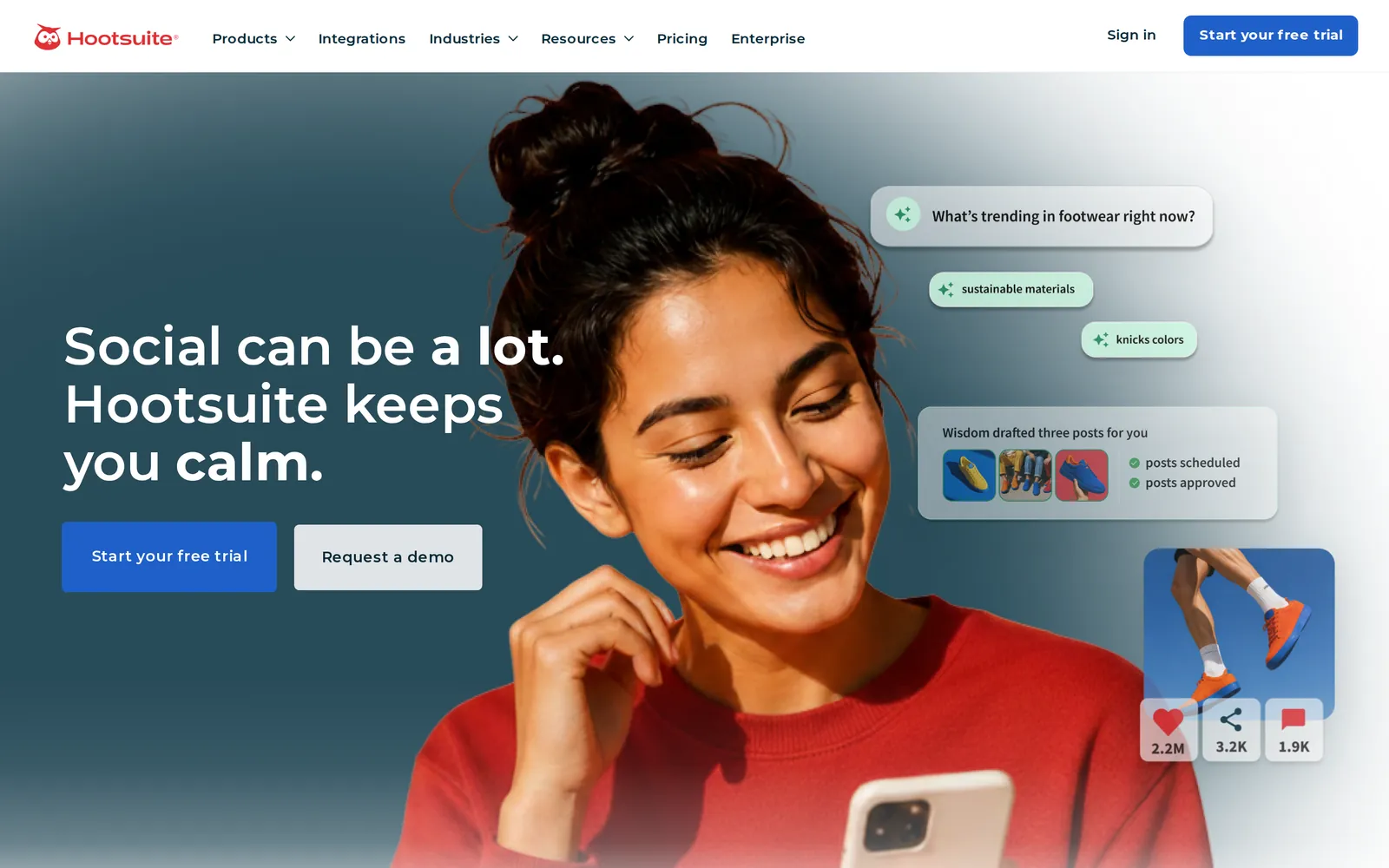
Hootsuite is a social media management platform. The Standard plan manages up to 10 social accounts and compares your brand's sentiment and mention volume with 2 competitors or topics; Professional raises that to 5. The free trial needs no credit card.
Competitive intelligence platforms
Klue and Crayon help product marketing teams keep battlecards current; a battlecard is a one-page guide that helps a seller compete against a named rival. AlphaSense serves research, strategy, and investment teams.
8. Klue
Klue is a competitive intelligence and win-loss platform. Compete Agent, its AI research assistant, gathers intelligence and delivers it to sellers during deals. The Win-Loss Suite collects buyer feedback through interviews led by Klue's analysts or an AI Interviewer that runs short voice calls with buyers and sellers. Product marketers can also update battlecards through Claude.

9. Crayon
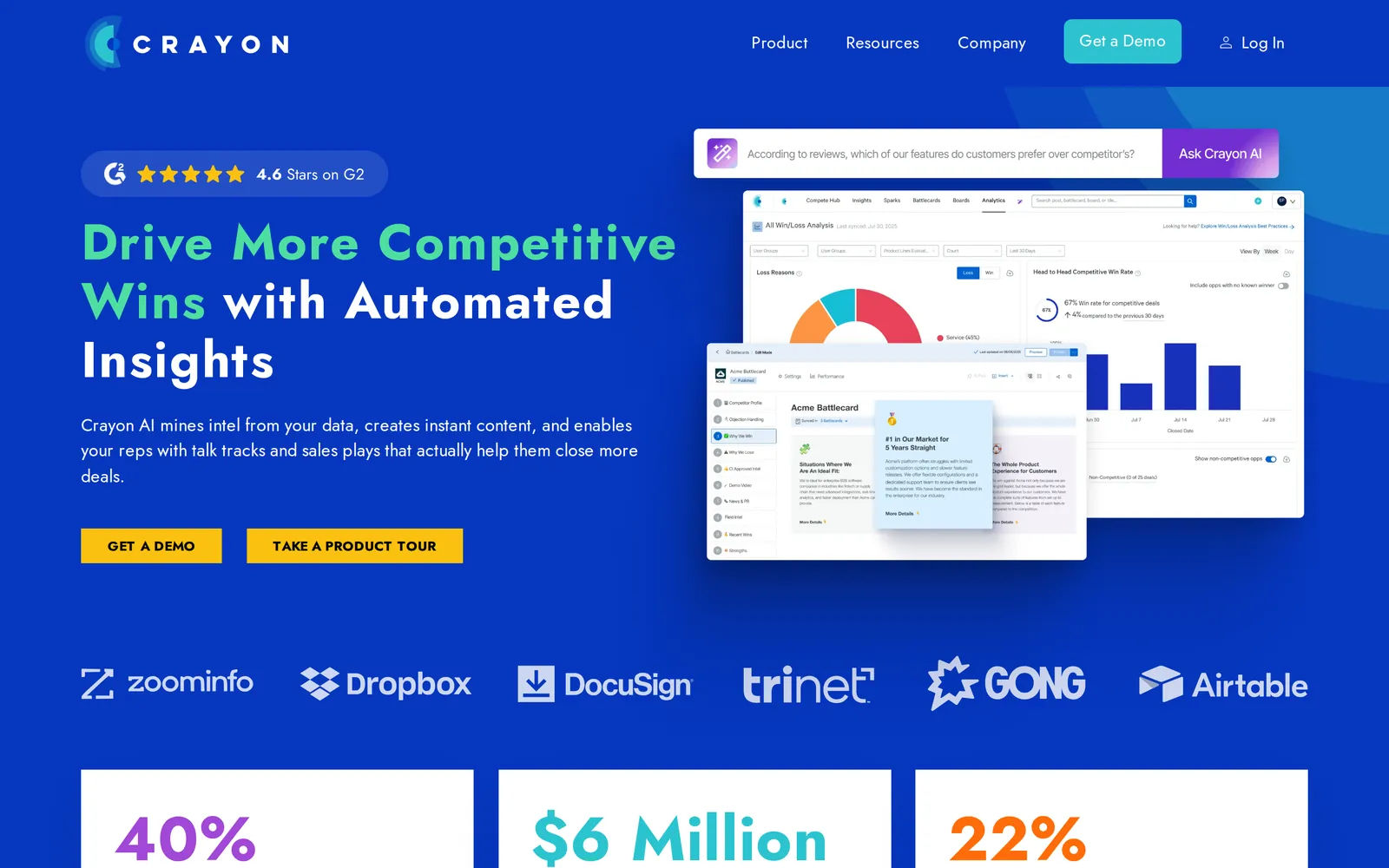
Crayon is a competitive intelligence platform that monitors competitors' websites, pricing, news, support documents, and customer reviews, and shows before-and-after views of changed pages. A morning email summarizes the previous day's most important insights. Crayon also pulls intelligence from Slack and from sales calls recorded in Gong, Chorus, and Clari. It gives a price estimate after a buyer submits a request form.
10. AlphaSense
AlphaSense is a market intelligence platform that uses AI to search more than 500 million documents, including SEC and global filings, earnings call transcripts, research from more than 1,000 sell-side and independent firms, and expert call transcripts. Customers include competitive intelligence teams and investment banks, private equity firms, and hedge funds doing M&A and investment research.
Build-your-own monitoring
A custom setup tracks the companies and sources you choose, including a due diligence target's rivals that vendor lists miss. The cost is setup time: engineering for an API like Exa, or building workflows yourself in a no-code tool like Zapier.
11. Exa
With our company search, you describe the target's product and customers and we return matching companies. One request can answer the first question in a due diligence memo: who competes with this company? In September 2026, the query below returned Payhawk, Spendesk, Pleo, and seven other spend management companies.
from exa_py import Exa

exa = Exa()  # reads EXA_API_KEY

target = "Ramp, corporate cards and spend management software for businesses"

results = exa.search(
    f"companies that compete with {target}",
    category="company",
    num_results=10,
)

for company in results.results:
    print(company.title, company.url)
Our financial data adds filings, earnings call transcripts, and funding announcements to the same search, and we search hundreds of domains and data providers other search tools miss. Exa Monitors run a saved search on a schedule and send only new results to your webhook. The base price is $2 per 1,000 requests. Start with the Exa search quickstart.
12. Zapier
Zapier is a no-code automation tool. Its RSS by Zapier trigger starts a workflow when a competitor publishes a new item to its blog or changelog feed, and a second step can post the item to Slack.
How to choose a competitor analysis tool
An SEO lead needs keyword, ranking, and backlink data on competitors that outrank them; Semrush and Ahrefs both provide it. Choose Ahrefs for the lowest SEO price on this list, and Semrush when one account needs keyword research, rank tracking, audits, and AI search visibility tracking. SE Ranking suits an agency tracking rankings and AI prompts across client projects. Choose Similarweb for a competitor's traffic and marketing channels rather than its rankings.
A social team comparing mentions, sentiment, and share of voice with competitors' has three options. Sprout Social suits a team that already publishes with it. Brand24 adds mentions from news, blogs, and review sites. Hootsuite has the lowest entry price of the three for competitor comparisons, so it fits a small team.
A product marketer needs to give sellers current intelligence when a named competitor shows up in a deal. Choose Klue, which pairs battlecards with win-loss interviews, if the program starts with buyer feedback, and Crayon if it starts with tracking changes to competitors' websites and pricing pages.
An investor or analyst doing due diligence needs a company's competitors and what they do during the deal. Our company search builds the competitor set from a description of the target, and a Monitor for each rival records new pages. Add AlphaSense if the fund also needs broker research and expert call transcripts on the same companies. A team without engineers can use Zapier's free plan.
FAQ
Is competitor analysis legal?
Reading a competitor's public website, filings, press releases, and reviews is ordinary research. The risk is in how you collect information: scraping against a site's terms, using fake accounts, or taking confidential information from a former employee. Read a site's terms of service and robots.txt file before scraping it.
How often should you check competitors?
Check pricing and product pages weekly and news daily. During active due diligence, check the target's rivals daily until the deal closes. Exa Monitors can run as often as hourly, so match the interval to the market's pace.
Cheers,
Keep learning
Browse all Learn articles →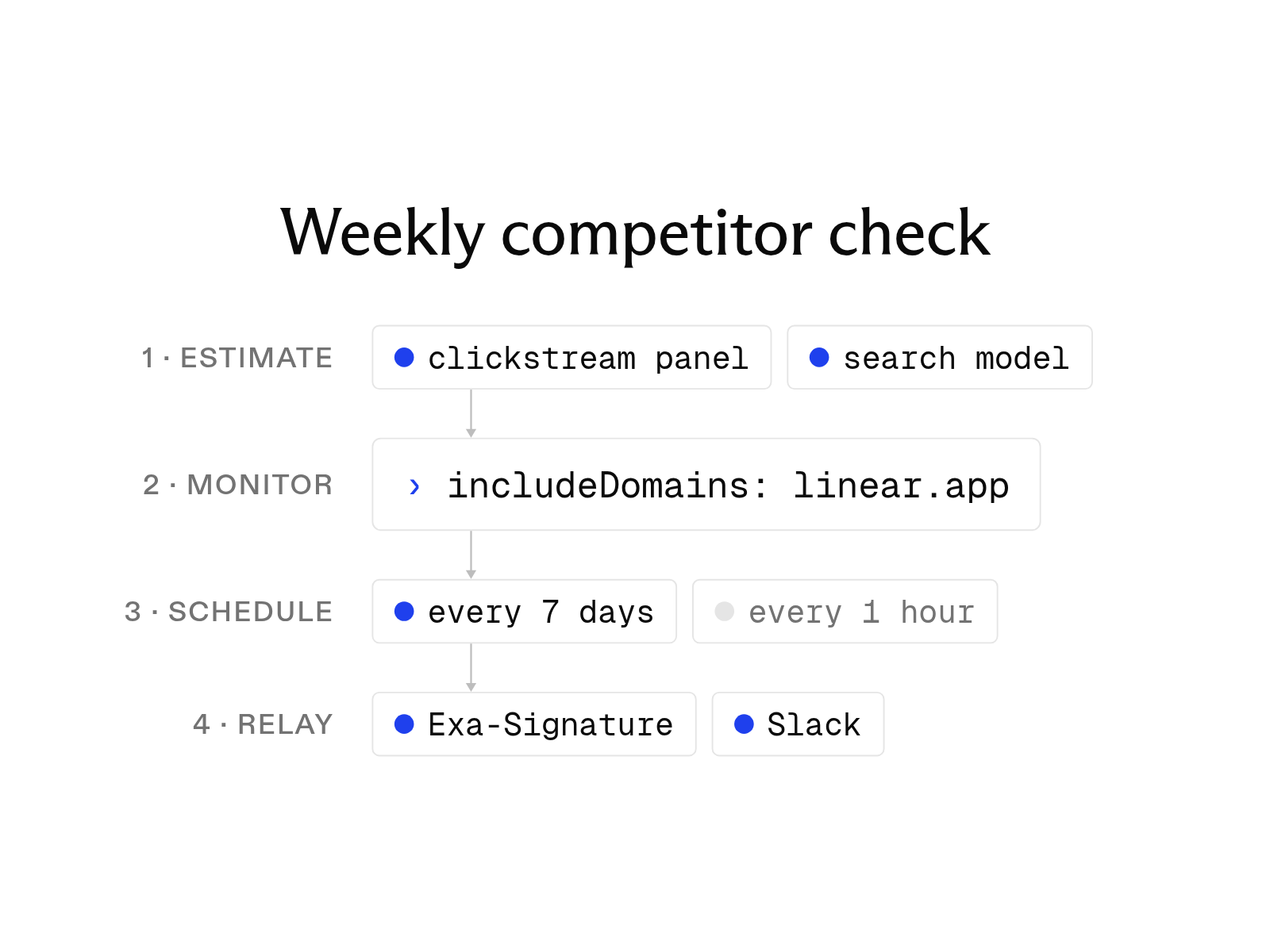
How to monitor a competitor's website traffic
November 24, 2026
The 12 best market and competitive intelligence tools in 2026
November 24, 2026
How to monitor a website for changes: steps, tools, and APIs
October 19, 2026
The 12 best media monitoring software tools in 2026
November 24, 2026
The 8 best free news APIs in 2026
October 1, 2026
How to build a data pipeline for live web data
November 24, 2026