The 10 best web crawler tools in 2026 organized by use case
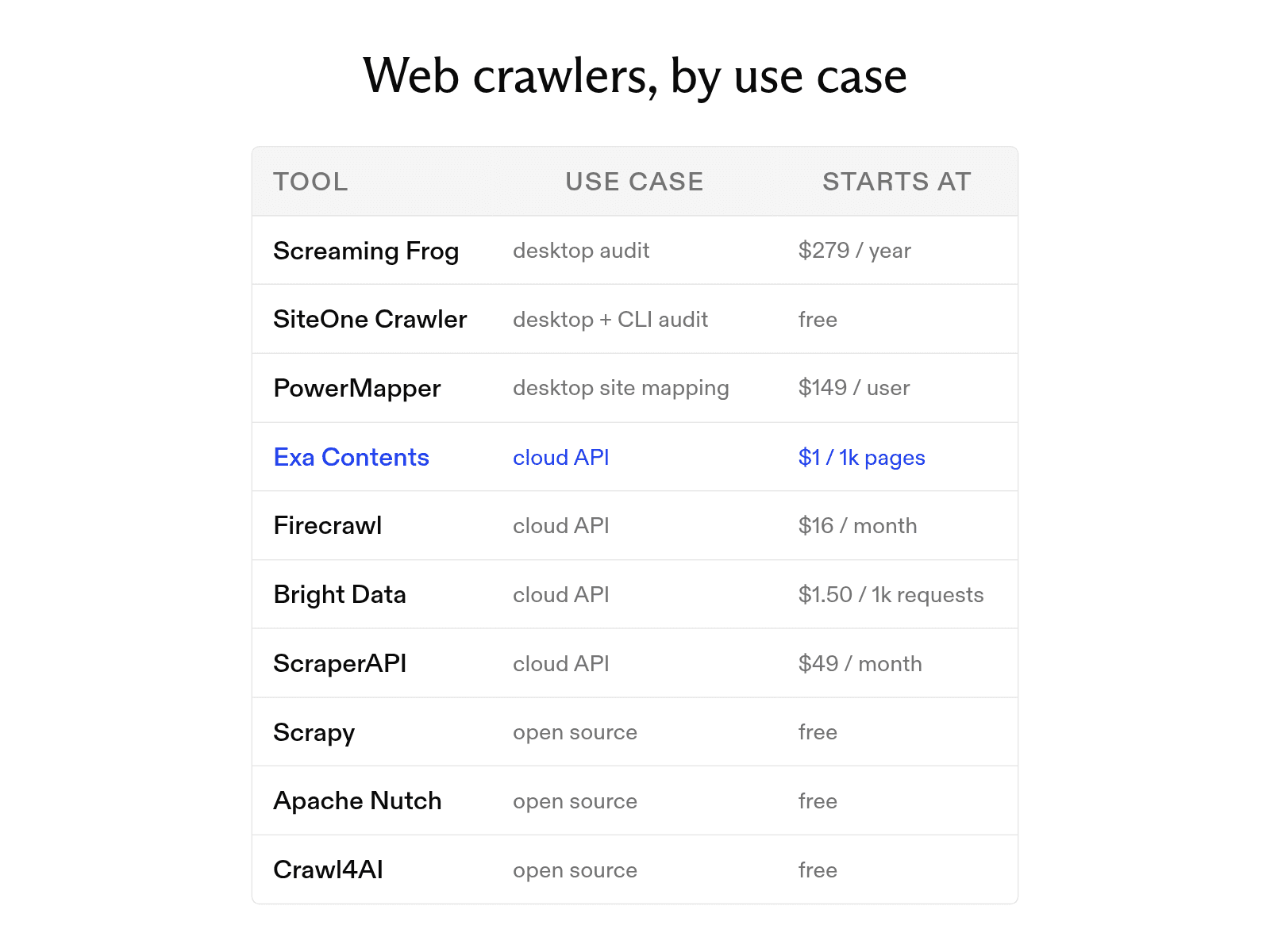

A web crawler visits pages, follows links, and records content for indexing, auditing, or extraction. Choosing the right one depends on the job, how much of the stack you want to run, and crawl volume.
For instance, SEO teams auditing their own site typically want detailed reports, developers feeding an application want a cloud API, and data teams building a dataset under their own crawl rules run an open-source framework they host and modify.
At Exa, we run the Contents API, which returns page content and query-relevant highlights to applications. It's a great option for a variety of use cases.
Below, we compare ten web crawlers by free tier offering, JavaScript rendering, output, and starting price.
How the 10 web crawlers compare
Prices are the lowest paid tier on each provider's site as of September 2026.
| Tool | Category | Free tier | JS rendering | Output | Starts at |
|---|---|---|---|---|---|
| Screaming Frog | Desktop audit | 500 URLs | Yes | Spreadsheets | $279/year |
| SiteOne Crawler | Desktop and CLI audit | Entirely free | Optional | HTML, JSON, Markdown | Free |
| PowerMapper | Desktop site mapping | None (30-day refund) | Not stated | Visual, XML sitemaps | $149/user |
| Exa | Cloud API | $20 initial + $10 credits/month | Yes | Text, highlights, JSON | $1/1k pages |
| Firecrawl | Cloud API | 1,000 credits/month | Yes | Markdown, HTML, JSON | $16/month |
| Bright Data | Cloud API | 5,000 requests/month | Yes | HTML, Markdown | $1.50/1k requests |
| ScraperAPI | Cloud API | 1,000 credits | Yes | HTML, JSON, Markdown | $49/month |
| Scrapy | Open source | Entirely free | Add-on | JSON, CSV | Free |
| Apache Nutch | Open source | Entirely free | Plugin | Search indexes | Free |
| Crawl4AI | Open source | Entirely free | Yes | Markdown, JSON | Free |
Desktop crawlers for site audits
Desktop crawlers are a popular choice to audit a site you manage. These three run locally as finished applications, so nobody writes code.
- Screaming Frog SEO Spider is built for technical SEO audits; a $279 annual license lifts its free edition's 500-URL limit. It renders JavaScript in embedded Chromium, flags broken links and redirect chains, and can schedule crawls that export to Google Sheets, so a monthly client audit runs unattended.
- SiteOne Crawler is a free, open-source desktop and command-line tool. It produces interactive HTML audit reports, full offline site copies, and Markdown exports, with an optional headless-browser mode for JavaScript-heavy sites. It can run as a CI step and fail the build on a broken link.
- PowerMapper generates visual site diagrams and XML sitemaps. The macOS and Windows app scans up to 22,000 pages at a time, and clients and design teams can read its diagrams without a spreadsheet.
Crawling APIs for applications
Choose a cloud API when your application needs page content on demand. For a language model, pick a provider that returns Markdown or only query-matching passages. If target sites run bot detection, compare proxy coverage and success-based pricing before leaving the free tier.
A cloud crawling API runs headless browsers and returns processed page data over HTTP. Unlike a basic script, it executes JavaScript for dynamic content and rotates IPs to get past anti-bot blocks. Many also strip navigation, footers, and ads, leaving only the page body.
- Exa Contents API extracts content from JavaScript-heavy sites and PDFs. Our
subpagesparameter, which accepts values up to 100, follows child links from a starting URL, so one call can pull a documentation tree without a pagination loop. Query-relevant highlights use fewer tokens than full-page text, cutting LLM prompt costs. New accounts get $20 in initial credits and $10 in monthly credits. - Firecrawl crawls from a seed URL; its documentation says it handles proxies, caching, rate limits, and JavaScript rendering. A basic crawl costs one credit per page, so the free tier's 1,000 monthly credits cover 1,000 pages.
- Bright Data Web Unlocker retrieves pages behind CAPTCHAs and bot detection, with automated retries and dynamic IP rotation.
- ScraperAPI includes JavaScript rendering on every plan. A seven-day trial gives 5,000 credits without a credit card; the free plan after it gives 1,000 credits and up to five concurrent connections.
Self-hosted frameworks for running your own crawl
Choose an open-source framework for custom crawling logic, local control over storage, or lower cost at high volume. The tradeoff: you run the servers, throttle requests, and handle IP blocks yourself.
- Scrapy is a BSD-licensed Python framework maintained by Zyte. You write the crawler; Scrapy schedules tasks, manages concurrency, and exports to JSON, CSV, or S3. Extensions like scrapy-playwright add JavaScript rendering, and the built-in AutoThrottle adjusts crawl speed to target servers' response times.
- Apache Nutch is a Java crawler built on Apache Hadoop for batch crawls across a cluster. Apache Tika plugins parse content, Solr, Elasticsearch, and OpenSearch integrations handle indexing, and a Selenium protocol plugin adds JavaScript support. It needs dedicated servers or a configured Hadoop cluster.
- Crawl4AI is an open-source Python library that crawls with Playwright and outputs Markdown an LLM can read without extra parsing. It supports CSS, XPath, and LLM-driven extraction, proxy management, and session reuse. Install it with a package manager or run it as a Docker container.
FAQ
How does a web crawler find pages?
Crawlers start with seed URLs, download each page, and extract its internal links. They queue new URLs and repeat until hitting a depth or page limit. Most also read the XML sitemap to find pages no internal link points to.
Is web crawling legal?
Crawling public sites is common, but legality depends on local law and the data you collect. Follow the site's terms and the Robots Exclusion Protocol, standardized as RFC 9309 in 2022. Leave authentication and paywalls alone, handle personal data under the privacy law covering your users, and ask legal counsel before crawling commercially.
Can a crawler overload a website's server?
Yes. Uncontrolled request rates can slow a server and trigger automatic IP blocks. Limit concurrent connections, add delays between requests, and follow Crawl-delay directives.
Cheers,
Keep learning
Browse all Learn articles →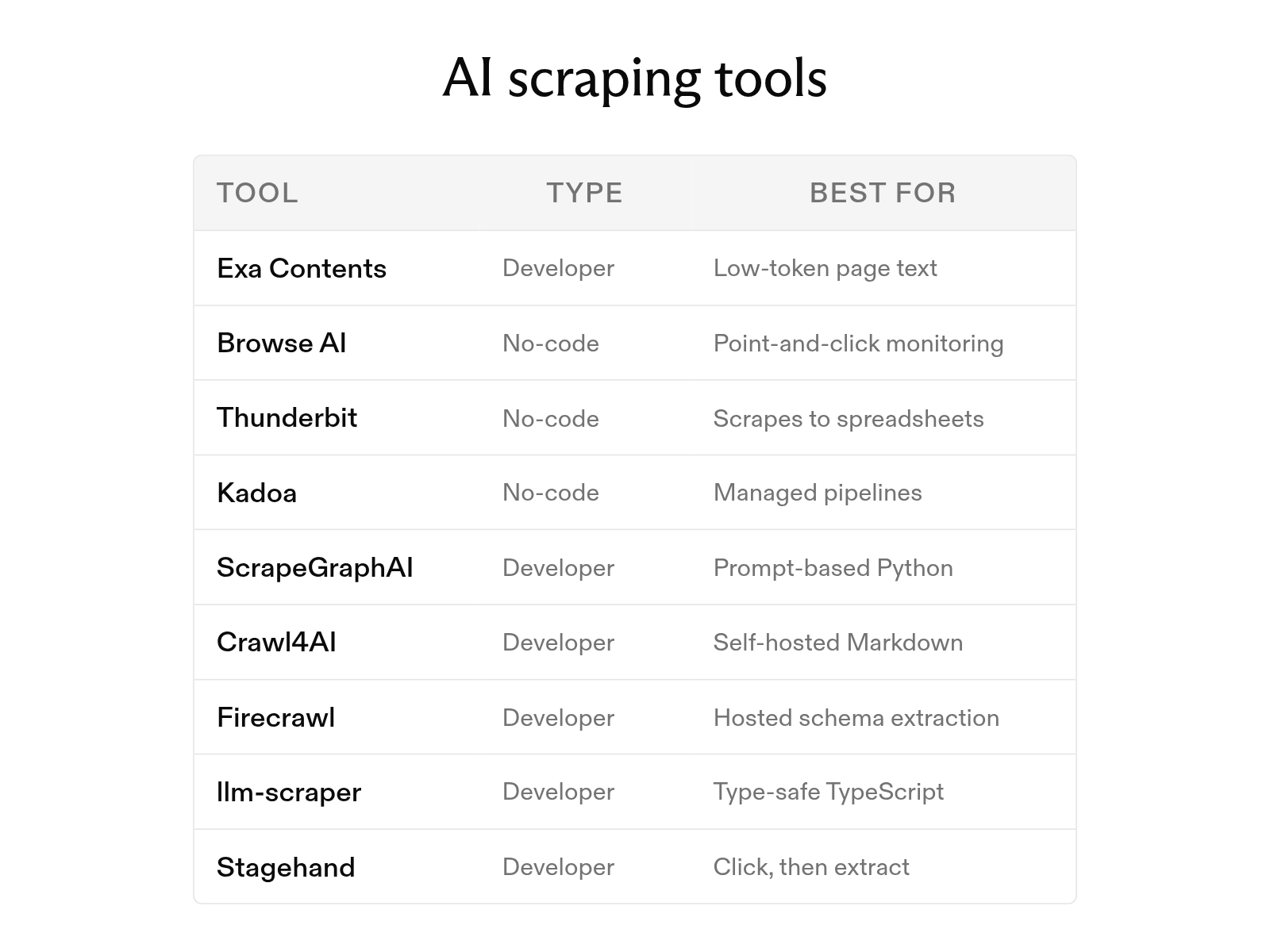
The 9 best AI web scraping tools in 2026 (and how AI scraping works)
October 6, 2026
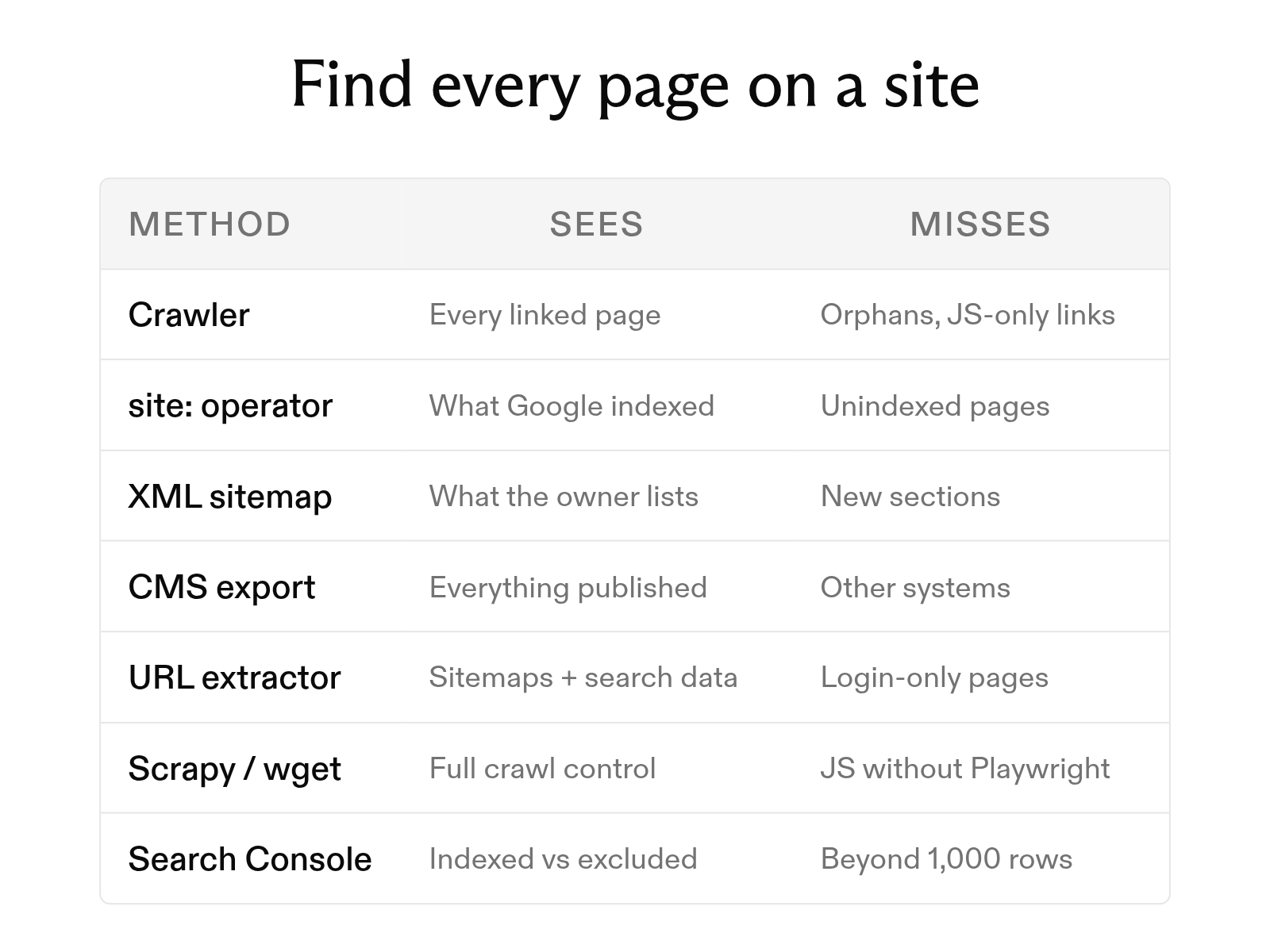
How to find all pages on a website: 7 methods
October 6, 2026
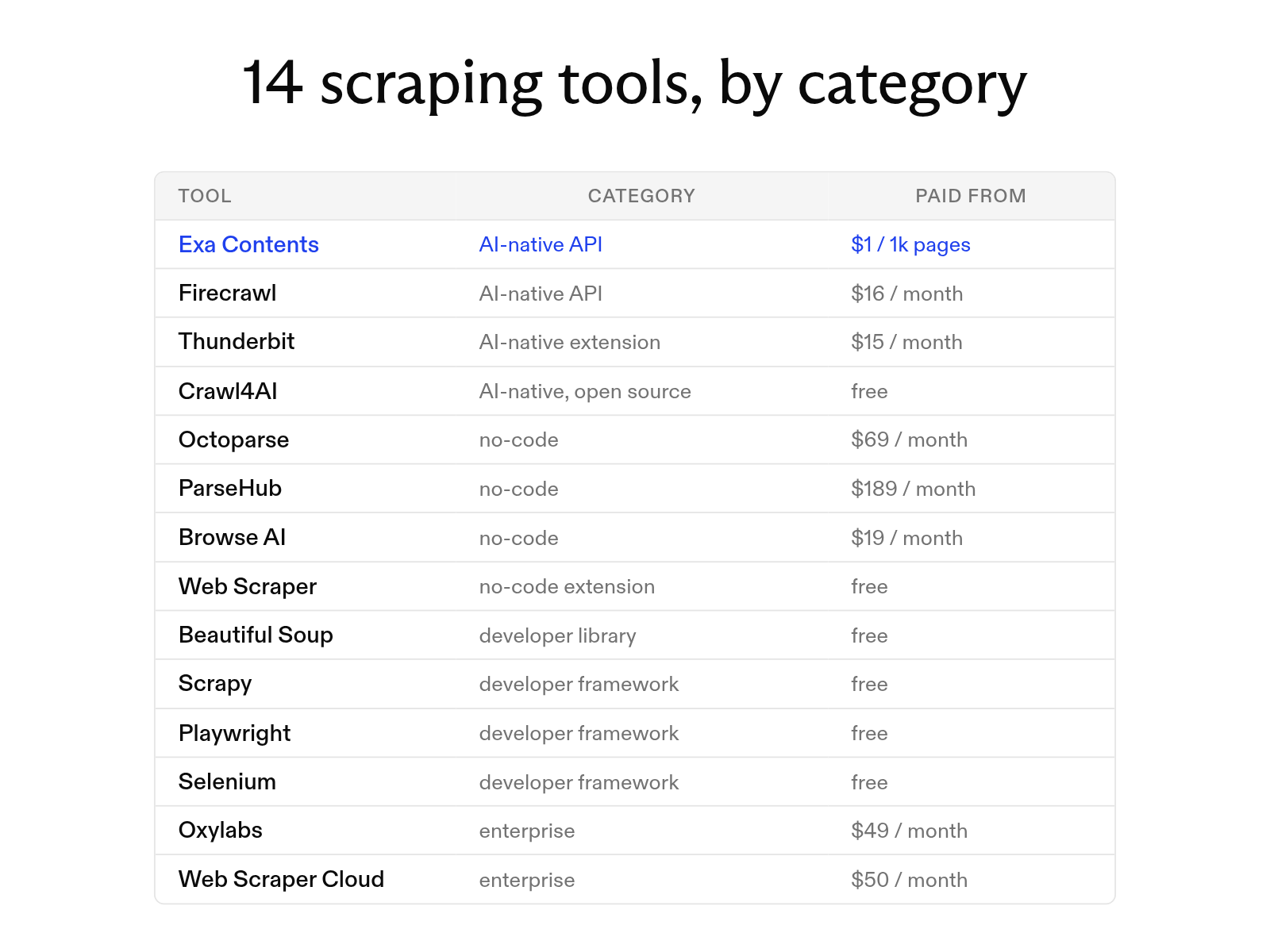
The 14 best web scraping tools in 2026
October 20, 2026
How to scrape a website: 9 tools and methods compared
October 20, 2026
URL to text: 3 ways to turn a webpage into clean text or Markdown
October 20, 2026
Web crawlers explained: how they work and 10 common crawlers
October 19, 2026