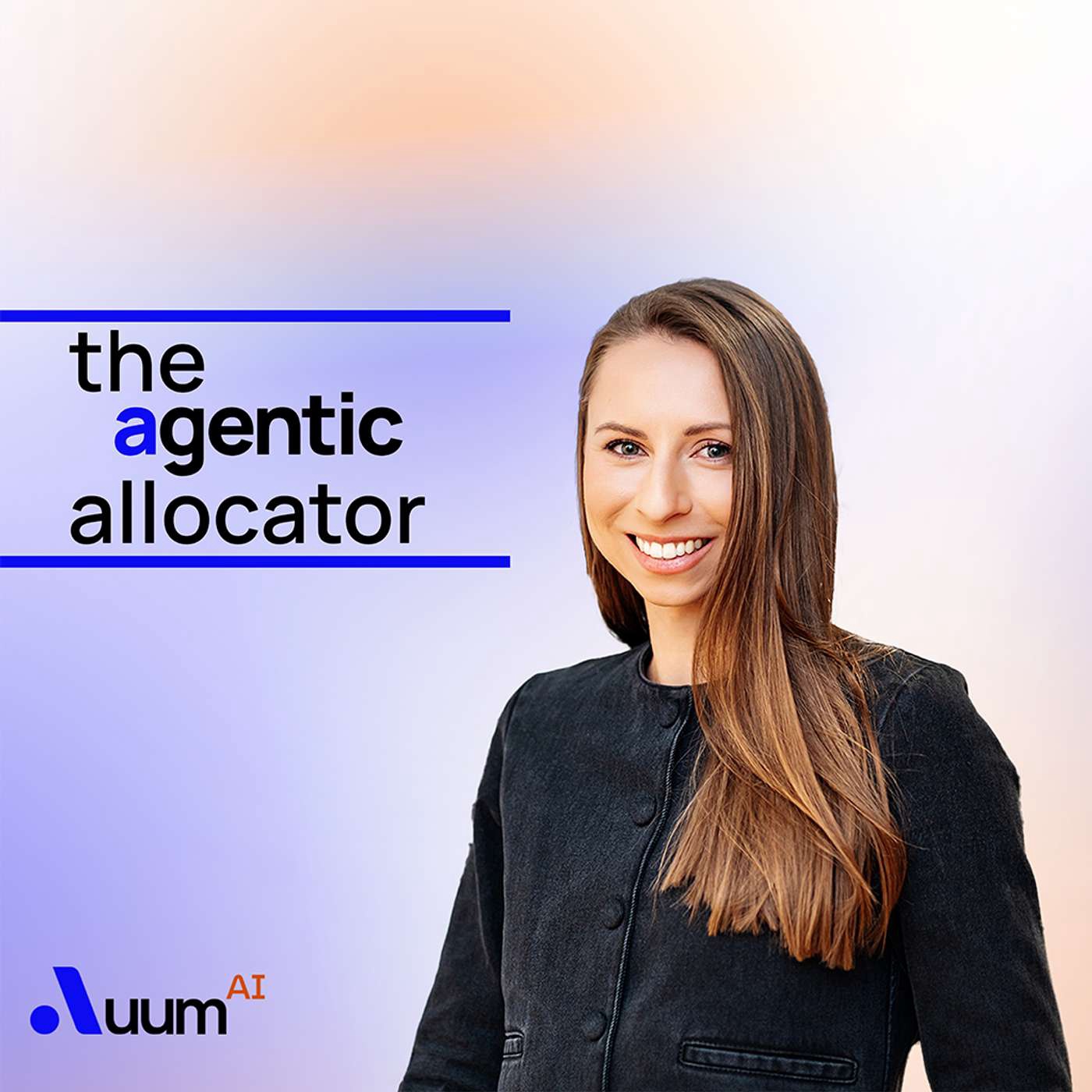
Who’s talking
2 speakersTranscript
38 turns · 18 minJust having the data and putting a tool on the data might not always do the trick. It's also making sure that you know how the various documents are connected to each other. In the environment we're in with fund documents, where you have a fund agreement, you have site letter subscription agreements, DDQs, information memorandum, you have all sorts of information. It helps a lot making sure that you are able to connect all those various documents. Guiding AI also making sure how those documents connect.
Welcome to the Agentic Allocator. Today we're joined by Vilmar Feenstra, partner at Loyens & Luf, where he is part of the investment management practice in Amsterdam. Vilmar has spent 18 years at the intersection of funds law and market innovation, advising GPs and LPs alike on everything from fund formation, carried interest to co-investments and GP stakes across Benelux.
A lot of parties like LPs or GPs might have concerns about the use of AI. In the beginning, you saw a lot of parties who basically started off saying, you cannot use it and we want to prevent you from using it because we just don't know what will happen with the information. Over time, everybody is now acknowledging that that's not a realistic approach where you need to use it, where you need to make sure that AI is being used in an efficient way.
Today's conversation explores how AI is reshaping fund formation, LPGP documentation and the broader alternatives ecosystem, and what that means for the lawyers, GPs and allocators navigating the shift.
I think it's important to always be aware that the question might not be answered correctly, but also if the answer is correct from an AI perspective, it might not be correct from a legal perspective.
I hope you enjoy the conversation. Vilmar, thank you so much for taking the time to speak with me today.
Thank you so much for having me. It's a pleasure.
Before we dive into our topic today, which is AI, I wanted to ask you a little bit of the backstory. So you advise LPs and GPs, but you've also actually been in the legal kind of tech space in many cases for a number of different years. You actually created a unique system internally over a decade ago to process subscriptions as well. And so I'd love to ask you to take me back to the beginning. When did AI first appear on your radar?
yeah so uh it's quite interesting times i have to say because it's uh indeed we have been developing all sorts of tools and and and things over time uh because we're always sort of trying to sort of improve our our service level and and by using all sorts of means and since technology has developed over time we always try to to use those at the utmost and and indeed Most of those things start off with some form of frustration or things where we feel that it's inefficient, either because we have internal discussions or we see that it takes too much time or we get some feedback from clients or investors. And indeed, some time ago, more than a decade already, I think, one of the things we also had was the onboarding of investors, which at that time and Sometimes we still encounter this. It was still in the old fashioned way where people were just filling out Word
Episode notes
Vilmar Feenstra, Partner in the Investment Management practice at Loyens & Loeff in Amsterdam, joins The Agentic Allocator to discuss how AI is changing fund formation, fund documentation, and the work of the lawyers, GPs and LPs who depend on them. Vilmar advises on both sides of the table: managers raising funds and institutional investors committing to them.
His central caution is specific to legal work. Hallucination is the obvious risk. The harder one to catch is an answer that is accurate as far as it goes but incomplete from a legal perspective. Used as a starting point, AI output is valuable. Used as the final answer, it becomes a liability.
Vilmar explains why governance has to be agreed before any tool is selected, why organising data is not enough unless AI understands how fund agreements, side letters, subscription agreements and offering memoranda relate to each other, and why he expects fund documentation to start carrying explicit provisions on AI use. He also describes the fund review agent his team built, why the first version fell short, and what continued iteration produced.
What You'll Learn:
- Why an answer that is correct from an AI perspective can still be incomplete from a legal one, and why that risk is harder to spot than hallucination
- Why decisions on tools, users, sign off and permitted data have to come before tool selection
- How clear