Who’s talking
8 speakersTranscript
69 turns · 55 minGood morning, everybody. How are you all doing? All right. Welcome to another live recording of the Theory of Change podcast. This is a DevEx podcast where I get to have in-depth conversations with leaders in global development. And this week, we are coming to you live from the UN General Assembly. My name is Michael Aigo. I'm a reporter on the DevEx news team. And I am delighted to be joined today by Buddy Shah, the CEO of the Clinton Health Access Initiative. Buddy, great to have you.
Yeah, thanks for having me. How's your UNGA going? It's good. You know, busy as
always. How do you UNGA?
Increasingly trying to have as many bilateral conversations on big substantive
ideas. Awesome. Well, thanks for making time for this. I'm excited for this conversation. You're with CHI now. We'll talk about that. You also serve as chair of the Anthropic Long-Term Benefit Trust. We'll talk about that. Prior to both of those roles, I mean, you've led some really fascinating organizations over the course of your career. Mighty Insight, which you co-founded, GiveWell, you know, a well-known pioneer in the sort of effective giving space. Now you're with Chai, you're working with Anthropic. What do you see as sort of the connective tissue between those respective roles or I suppose the connective tissue in your career? What's the sort of bigger project that you see yourself building towards?
Yeah, well, thanks for starting with that question. I mean, the bigger project that I think I'm building towards really started when I was a freshman in college and had to do a required moral reasoning class. And I still remember reading John Rawls' The Theory of Justice. And basically, Rawls asked this question of, if you could design any world not knowing where you'd be born... what kind of world would you design? And essentially talks about the accident of birth, that so much of our position in society is determined by the randomness of the lottery of life. And so whether you're born in a rural part of Bihar, India, or in urban Mumbai, or to a wealthy family in New York, that determines so much of your life outcomes, as opposed to things that we traditionally think of as deserving. And so I think reading that book really, you know, was like
a lightning bolt for me. You actually read The Theory of Justice? Yeah. I don't know anybody actually ever read that. You made it through. All right.
Well, most of it, let's say. Enough to write the papers for class. But I think thinking about that and then thinking about my relatives in East Africa and India that had very different life opportunities, but frankly had a lot of the same underlying genetic material, parents who cared, made me want to erase the accident of birth was the overall frame. And then I think the through line from a career perspective was just trying to think about how do we find the ways that improve lives the most? And so with ID Insight, that was about really rigorously testing what works and what doesn't. So you could make at scale decisions that improve lives as much as possible. At GiveWell is answering that question, but a slightly different frame in terms of like, where can we identify fundable opportunities
Episode notes
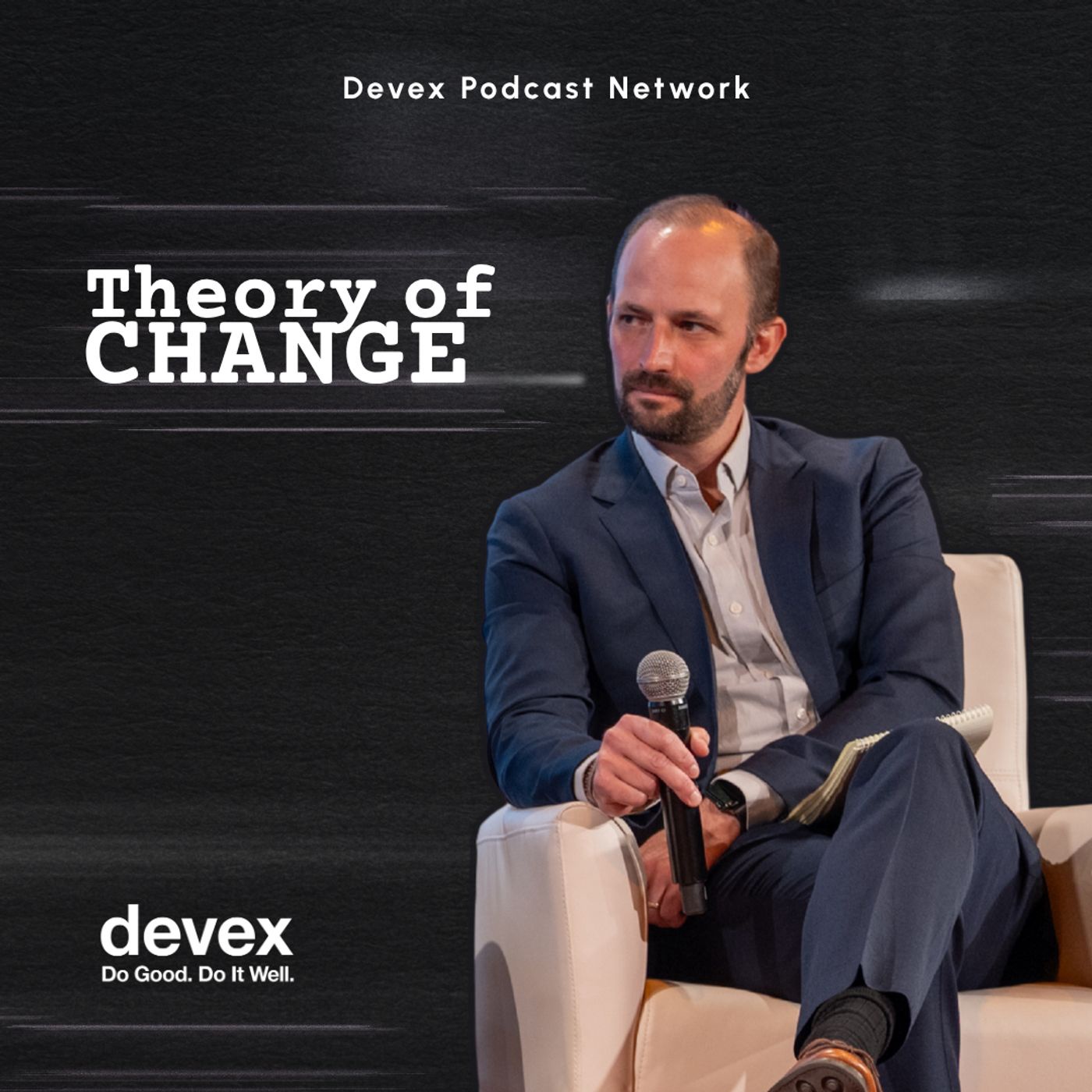
In a live episode of the Theory of Change podcast, Buddy Shah, CEO of the Clinton Health Access Initiative and chair of the Anthropic Long Term Benefit Trust, shared an inside look at the intersection of global health, market-shaping agreements, and artificial intelligence.
"The mistake that many of us are making ... is looking for an AI point solution. What's a cool use case where you can develop an AI tool and slot it into an existing system? And I think the much more important question is: If you could redesign the system for a world where you have very powerful AI tools, what would that look like?" Shah said during the podcast, which was recorded last week at the Devex Impact House in New York on the sidelines of the United Nations General Assembly.
Shah pulled back the curtain on CHAI’s landmark deal to secure generic manufacturing of lenacapavir — a twice-yearly injectable drug offering 99% effectiveness against HIV infection.
**By negotiating the price down from $28,000 per year in the U.S. to $40 per patient per year in lower-income countries, Shah explained how CHAI,