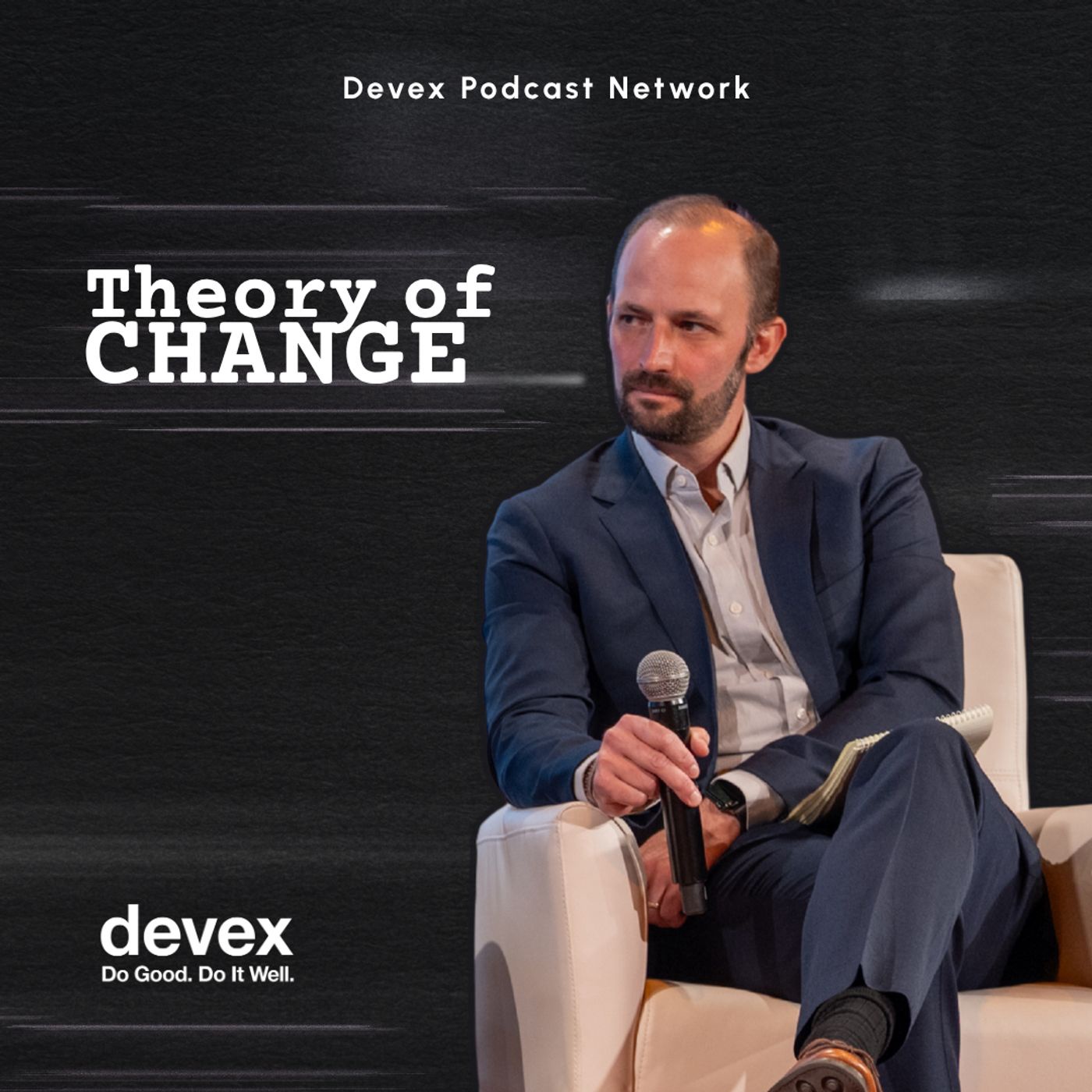
Who’s talking
2 speakersTranscript
35 turns · 53 min[instrumental music] There's a lot of talk these days about country ownership. Against a backdrop of historic cuts to development assistance by many of the world's largest donors, the chorus of voices calling for national governments to set and finance their own development agendas is growing louder. It's a messy mix of necessity as other funding sources dry up, and a real opportunity to shift responsibility and agency. I've found that this is one of those topics where it's a lot easier to say the right things than it is to be really specific about why progress hasn't happened faster. Why don't communities and their own elected officials have a stronger voice in development decisions? Where do they actually need help from international partners and funders? Yemi Osinbajo is the former vice president of Nigeria, and he's had a front row seat to that relationship between national and international priorities and partnerships for years. Now he's the co-chair of one of the more prominent efforts to rethink how development cooperation works. It's called The Future of Development Cooperation Coalition. I spoke with him about that black box where power imbalances still skew funding and decision-making away from national priorities, and how to crack that box open. And I asked him about his signature hat. Here's Yemi Osinbajo. Your Excellency, thank you so much for joining the podcast.
Thank you. Thank you for having me. Thanks.
So Yemi, in my research for this episode, I discovered that not only are you a politician, a pastor, a lawyer, and a professor, um, but you are also a fashion icon. [laughs] The hat, the hat that you are currently wearing, which I understand is a, a traditional hat, um, has come to be known as the Osinbajo style because of you, Yemi Osinbajo. I think you're the f- the first fashion influencer I've ever interviewed. Any wisdom to share with the rest of us?
Uh, now, now let me tell you, Michael, the, the truth of the matter is that, you know, if wearing exactly the same thing every day makes you a fashion icon, then, then I'm guilty of, of being a fashion icon. [laughs] The truth is that I, you know, um, this is just easy to wear. It is simple. [laughs] So, and I don't wear... I mean, I hardly wear anything else, except maybe an additional gown with the, you know, the third piece. But otherwise, this is how I'm dressed practically every day. So I suppose, [laughs] I suppose more notoriety than, than being an icon. [laughs] Right.
Well, whatever you're doing, it's working for you. Um, [laughs] to, uh, dig into a bit more of the, the substance of your, your path, can you start by, um, telling me how you became involved in politics, and how has that intertwined with these other paths that you've pursued, your faith leadership, um, your, you know, work in law? When did politics enter into the equation, and, and how did that begin for you?
Okay. So, so, so, so I think that I've always been, you know, uh, somewhat socially conscious, you know, and I think that that's from when I was ex- when I was young. I've always been very socially conscious. I mean, I've always been concerned about various things, you know, whether they were matters
Episode notes
What is “country ownership,” really? And what gets in the way of making it a reality?
Against a backdrop of historic cuts to development assistance by many of the world’s largest donors, the chorus of voices calling for national governments to set — and finance — their own development agendas is growing louder.
Yemi Osinbajo, the former vice president of Nigeria and co-chair of the Future of Development Cooperation Coalition, has seen firsthand what happens when international donors and national development priorities are aligned — or not.
Osinbajo joined the Devex Theory of Change podcast to challenge the myths and misconceptions around state capacity, corruption, and international finance.
"Forget about giving cash or aid. Let's focus on systemic changes that can release the resources that African countries need for their development,” Osinbajo says.
That means targeting markets and value chains that currently disadvantage lower-income countries, through systemic partnerships rather than one-off handouts, he says.
It also means being honest about who is complicit in propping up systems that are plagued by corruption, or biased against regions perceived as risky, whether they truly are or not.