Who’s talking
2 speakersTranscript
89 turns · 1 hr 27 min[on-hold music] In his 2003 State of the Union Address, President George W. Bush made a stunning announcement: $15 billion for the President's Emergency Plan for AIDS Relief, PEPFAR. He called it a work of mercy beyond all current international efforts to help the people of Africa. Mark Dybul was one of the people tasked with figuring out how to turn that audacious proposal into a reality. Then he became the first person to lead that new initiative, which has saved tens of millions of lives. You might expect that with so much concern right now about the impacts of Trump's foreign aid cuts on global HIV programs in general, and on PEPFAR in particular, that Dybul would be outraged or ringing the alarm bells as many others are, that he would feel like his legacy is under attack. You might be surprised. Dybul, who also went on to lead the Global Fund to fight AIDS, tuberculosis, and malaria, told me that PEPFAR was never meant to continue the way that it did, that he has been frustrated by the initiative's evolution or lack of evolution for years. He also told me there is a very narrow window of opportunity, twelve to eighteen months, to get it right this time. Dybul has taken some heat for his positions on the future of U.S. global health leadership. He might take some more after this conversation, but I think it's a vital one. Here's Mark Dybul. Mark Dybul, welcome to the podcast.
Thanks, Michael. Great to see you again.
Good to see you, too. It's been a while.
Yeah, it has.
I want to start with DOGE. And the reason I want to start with DOGE is you were heavily involved in the creation of PEPFAR back in 2003, um, under President George W. Bush's leadership. And I think, you know, the story of PEPFAR has been told over and over again, um, but a couple things-
John Don is coming out with a new book that will tell it in a new way.
We'll, uh, put that on the reading list. Um, but, you know, the, the, the elements of that initiative and its creation that everybody points to, um, are-- they're really stunning. I mean, to people even in, you know, deeply involved in, in fighting HIV and AIDS, um, the stunning amount of funding, the, um, sort of idealism, um, in announcing it at the State of the Union to the American people as this great act of mercy, um, really sort of like a, a moral calling, um, for the United States. Um, it really says something about kind of like a vision for the power of government and what government can do. And the reason I say all that in a question about DOGE is I think there's a way to look at DOGE and PEPFAR as polar ends of a spectrum, or maybe like DOGE as a negative reflection of PEPFAR. Um, really skeptical about the role of government, really skeptical of any argument that the United States government or the American people have obligations to the rest of the world, um, and really, um, tied up with, um, pulling institutions apart as opposed to creating them. And I guess I'm just really curious, having been involved with the, the first, [chuckles] um, version of that, how do you understand DOGE?
Yeah. So I mean, like everything, it's a mixed question, and I like the way you started with PEPFAR. So going back to PEPFAR and,
Episode notes
For over two decades, the U.S. government has been a lynchpin in the global fight against HIV, pouring billions of dollars into treatment, prevention, and health systems strengthening through initiatives like the U.S. President’s Emergency Plan for AIDS Relief, or PEPFAR.
Then came Elon Musk, the foreign aid freeze, and a disruptive set of reforms to U.S. global health programs under President Donald Trump’s “America First” Global Health Strategy. Against the backdrop of this tumultuous moment, the question remains: Was the old framework built to sustain solutions, or merely to sustain itself?
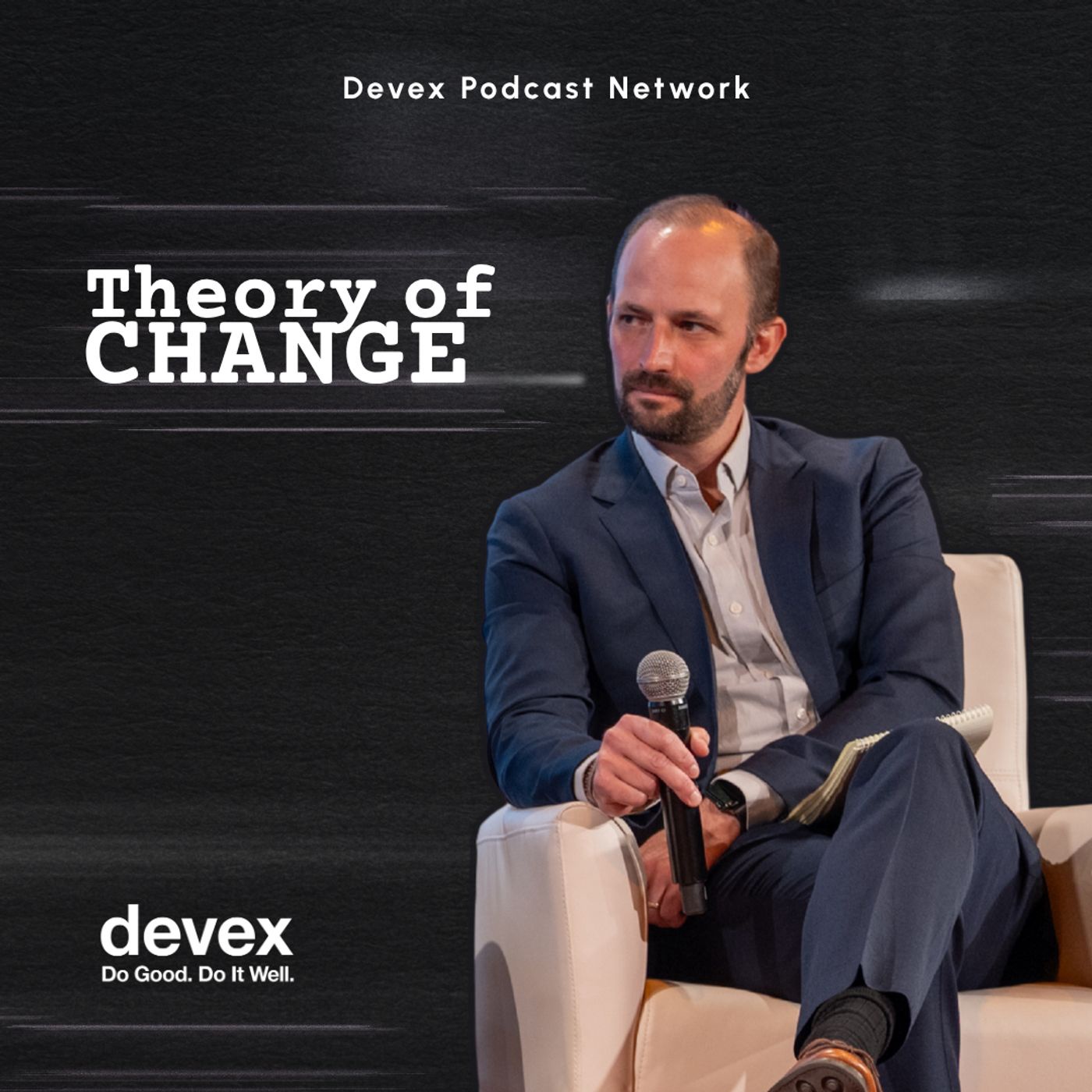
Mark Dybul, PEPFAR’s first leader, who served from 2006 to 2009, joined the Theory of Change podcast to deliver a blunt assessment of the legacy and current trajectory of foreign assistance. Reflecting on the evolution of former President George W. Bush’s signature global health initiative, Dybul addressed the sharp criticisms now driving a broader push for reform.
**While acknowledging the lifesaving impact of past initiatives, Dybul pointed to a fundamental failure in long-term strategy: The shift toward true local