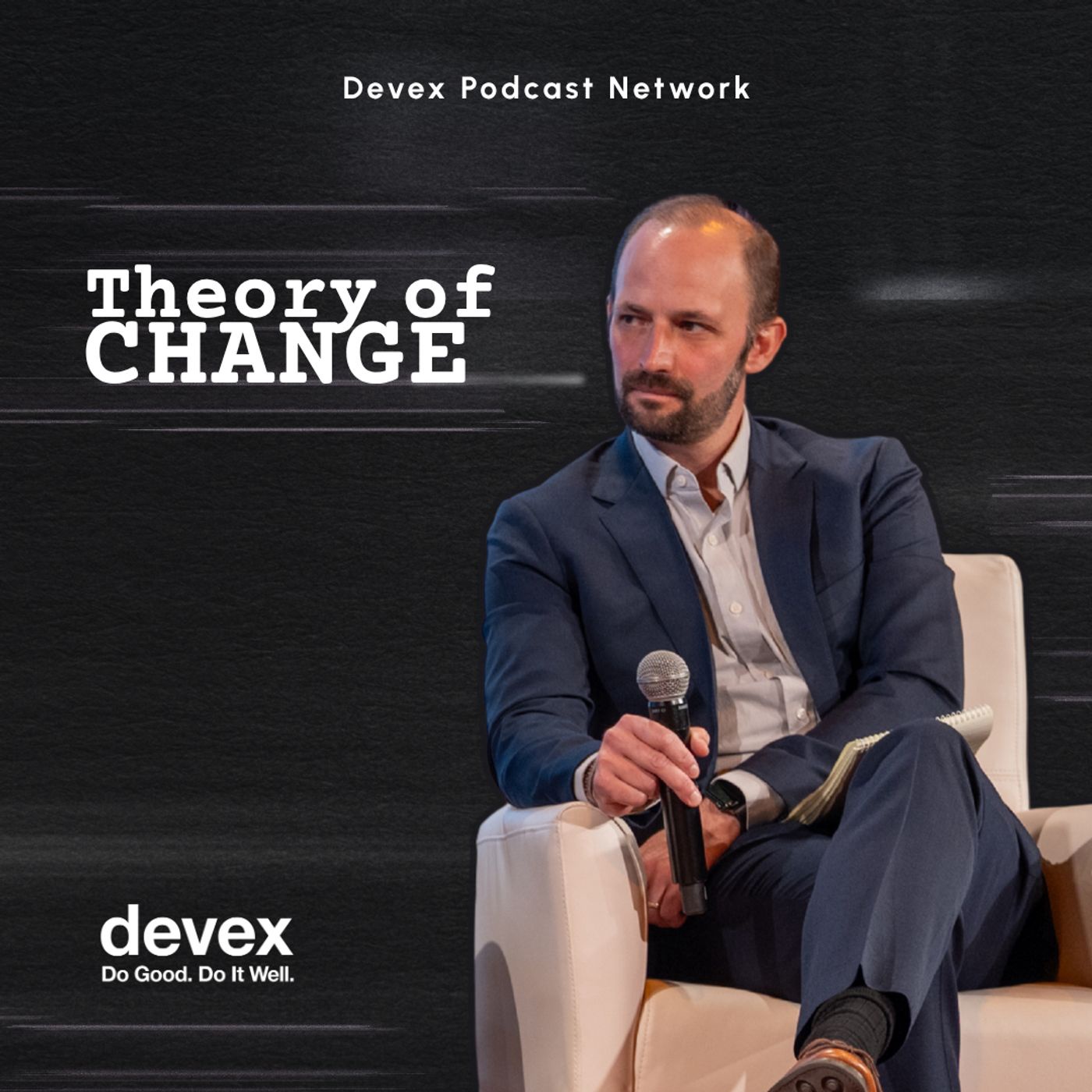
Who’s talking
2 speakersTranscript
86 turns · 1 hr 16 minThere are two immense problems at the heart of humanitarian relief today. Problems that the humanitarian system was not built to account for. The first is that conflicts last a really long time. With a few notable exceptions, most wars are not fought between countries, but rather within them. and these tend to simmer and persist and inflict damage for years. The second is that people who are forcibly displaced by these protracted crises rarely go back home. Instead, many refugees remain stuck in limbo, consigned either to camps that are underfunded and under-equipped to provide long-term solutions, or to a refugee resettlement system that has been battered by politics and populist rhetoric. It's a conversation that often quickly devolves into binaries, into the patterns of polarization that hijack real problem solving. Or maybe we're just having the conversation in the wrong places. Nazanin Ash is the director of Welcome.us, an organization that was born out of the refugee resettlement crisis that stemmed from the fall of Kabul, Afghanistan in 2021. A longtime humanitarian leader, Ash sees a different starting point for helping the people that she calls newcomers find pathways out of chaos and into their full potential. The starting point is with communities, with what she believes and what she has seen to be their deep-seated desire to be places of welcome. And what she's finding is something that people in our world have said for a long time might really be true. Community-based solutions are actually better ones. And they can sometimes illuminate a way forward when everything else feels stuck. Here's Nazanin Ash. Nazanin Ash, welcome to the podcast.
Thank you so much for having me, Michael.
You were born in Kansas. Your parents are from Iran. What did you learn from them about what it means to be part of a community?
Oh my gosh, Michael, you started this at a place I didn't anticipate, but we will go with this. I learned from my parents' experience about community in this way. My parents were exchange students from Iran. So they came to study at the University of Kansas and they had me very accidentally. So my parents were still undergrads when they had me. Um, and, uh, and then my dad, um, was doing his PhD at the university of Minnesota and the Iranian revolution, if you can believe it broke out on the day that he was defending his PhD.
Oh my goodness.
Yeah. So that's how I learned about community. Because it was my dad's Jewish dissertation advisors who really took care of us. And what we were, you know, I describe us as a very young, shell-shocked Muslim family. At a time when Iran was in the news, not unlike today, but when 66 American hostages were being held for over a year and every single night. was news feeds were filled with really frightening images from Iran. My parents were going through a real personal crisis. and our community of americans around us we were the only you know i think my parents had a few they had a few other um sort of fellow foreign exchange student iranian friends but what i remember is my dad's dissertation advisors having us over for a shabbat dinner and i really remember um I almost hear them in my head
Episode notes
In the latest episode of the Theory of Change podcast, Nazanin Ash, CEO of Welcome.US, discussed how community-driven sponsorship could revolutionize refugee resettlement, bypass political gridlock, and offer a scalable alternative to overburdened government systems.
Global forced displacement is at an all-time high, and standard, bureaucratic response models are failing to keep pace. Ash argued that mobilizing local communities rather than relying solely on government aid can unlock massive potential and provide orderly, human-centered pathways for newcomers.
The problem: Traditional global systems are built for short-term, state-versus-state displacement, but modern conflicts — predominantly civil wars — are protracted, lasting decades on average. As a result, massive, unmanaged crises crowd out long-term development funds.
“Civil wars burn forever. They’re really tough to resolve. And our international tools for conflict resolution are really bad at solving them,” Ash said.
By the numbers: By shifting the focus from a government-managed process to direct community sponsorship, Ash said that Welcome.US demonstrated unprecedented scale during recent crises such as the war in Ukraine:
- 800,000 newcomers welcomed by American communities in under three years
- **Four times as many individuals resettled