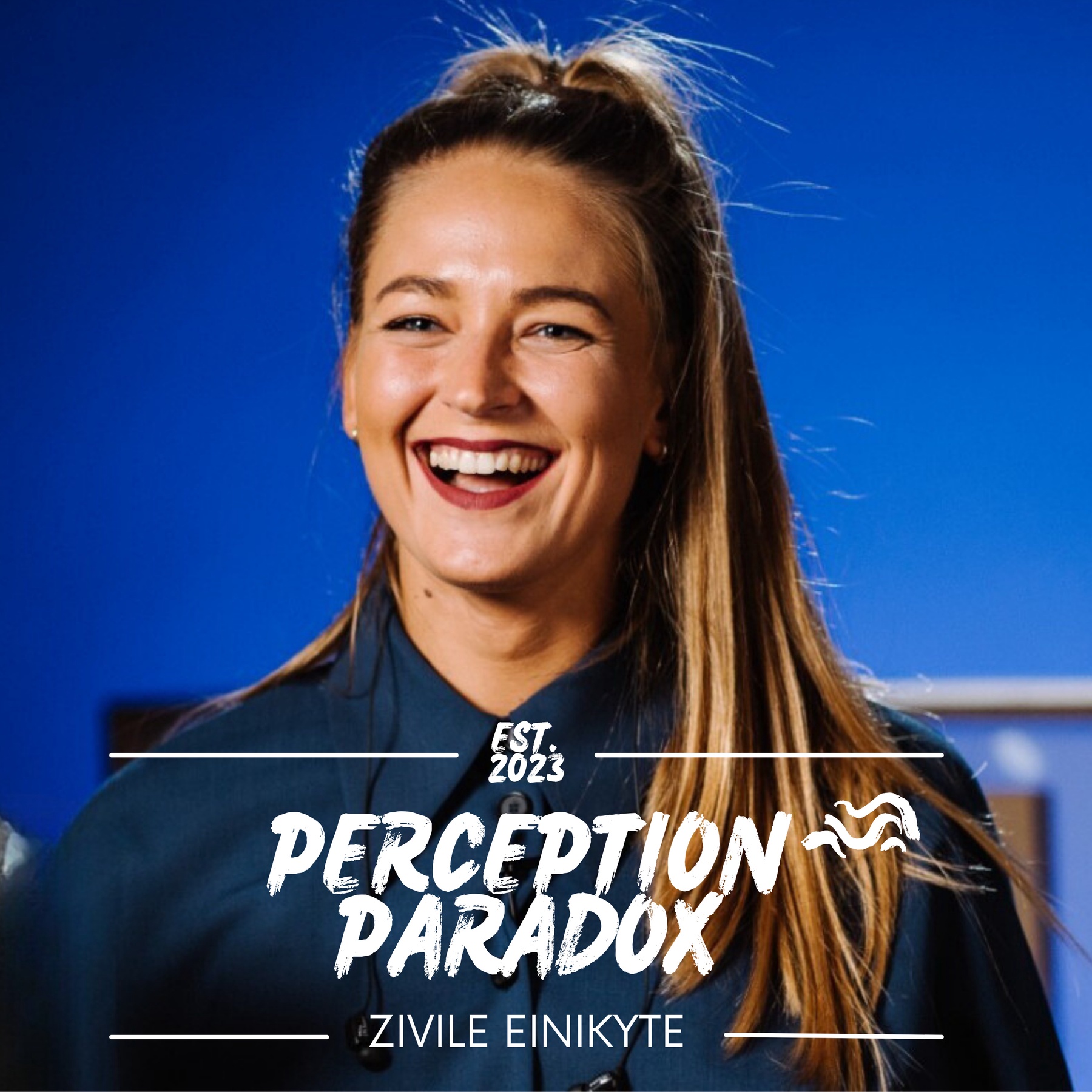
Who’s talking
2 speakersTranscript
58 turns · 40 minHi guys, welcome back to Perception Paradox. My name is Juvita and I'm your host. And yeah, that's the show where we question the things we think we already understand. And here is the paradox for today. So the smarter our machines get, the more our humanity becomes the thing that actually matters. And my guest has lived on both sides of that line. Ted Yang is an MIT engineer who was studying AI 30 years ago. long before any of us were talking about it, and a self-described recovering hedge fund guy. He's founded more than a dozen companies and his book, Ageless Peak Performance, makes a refreshing case that AI isn't here to replace you or steal your job. It's a tool we built, and the real question is how we use it to become more human, not less. We met a few weeks back at South Summit and in this conversation we get into what's generally worth optimizing in your life and what you should never hand to a machine. Why writing too well is suddenly a liability, how Ted uses AI to write his own book and why in a world of endless screens he still believes that the most powerful technology in the room is two people talking face to face. Let's dive in. Real people, real stories, and real challenges that break the status quo. I'm your host, Zhivila, and welcome to Perception and Paradox. All right, ladies and gentlemen, welcome back to Perception and Paradox. And today I have with me Ted Young, with whom we met a couple of weeks back at Self Summit. So, Ted, welcome, finally.
Hey, how are you? How are you? Yes, it's a little bit a little while since South Summit and obviously a little bit further away from each other, but good to see you.
to see you too again we've just touched base on the conference frequency and recovery and energy so have you recovered after your one week away from home and being in the high energy environments yes and no
right yes and no because um when you come home for a little bit of time away and see i'm in new york based so when i go to europe it takes a little bit more time to get out there uh you come back and there's always a lot to deal down here so uh When you come back home, it's good on one front to kind of recover a little bit, but on the other hand, there's just a lot of stuff waiting for you, right?
Yeah, it's always like that. It's not only fun and great dinners and networking. There's always the backlog. Right. So Ted, maybe for everyone who is listening to us today, what kind of hat are you wearing right now? Because if we go and look for you online, right, you've been wearing so many multiple hats from Masters at MIT to having this title of recovering hedge fund guy and so on. So how do people know you in the last few months?
Yeah, that's a good question. And actually, it's funny because you just reminded me that I have that recovery. I probably have to change that, right? Because it's been almost 15 years. So I think at that time, I might be recovered. I'm not sure. I'm not sure. Well, maybe, you know, it's kind of like when I hit as many years in as I have out, then maybe I can say that's then I'm done. But so... the thing I spend the most time now is my book. It's the red one right behind you with the yin yang
Episode notes
The smarter AI gets, the more your humanity matters. MIT engineer, 13-time founder, and self-described "recovering hedge fund guy" Ted Yang joins Zivile to flip the AI conversation on its head - away from fear and job loss, toward using it as a tool to perform, think, and live better.
We talk about what's truly worth optimizing (and what isn't), how Ted used AI to write his book Ageless Peak Performance, why polished writing now reads as "fake," the idea that you can stay at your peak longer with the right tools, and why face-to-face connection is still the most underrated technology we have.
📘 Ageless Peak Performance → AgelessPeakPerformance.com
Hosted by Zivile Einikyte · Perception Paradox
https://www.linkedin.com/in/zivileeinikyte/
Chapters
Chapters
00:00 Introduction and Background
04:26 AI and Human Performance
05:45 Challenges in Scheduling and Optimization
08:19 The Human Element in AI
11:43 Using AI for Writing and Creativity
14:42 Managing AI Subscriptions and Tools
15:48 Optimizing Workouts and Nutrition
17:59 The Motivation Behind Writing Again
20:49 The Human Aspect of AI
23:02 The Importance of Physical Books
24:33 The Value of Human Connection
26:06 Navigating AI's Impact on Communication
26:36 Identifying the Ideal Reader
29:30 Book Promotion and